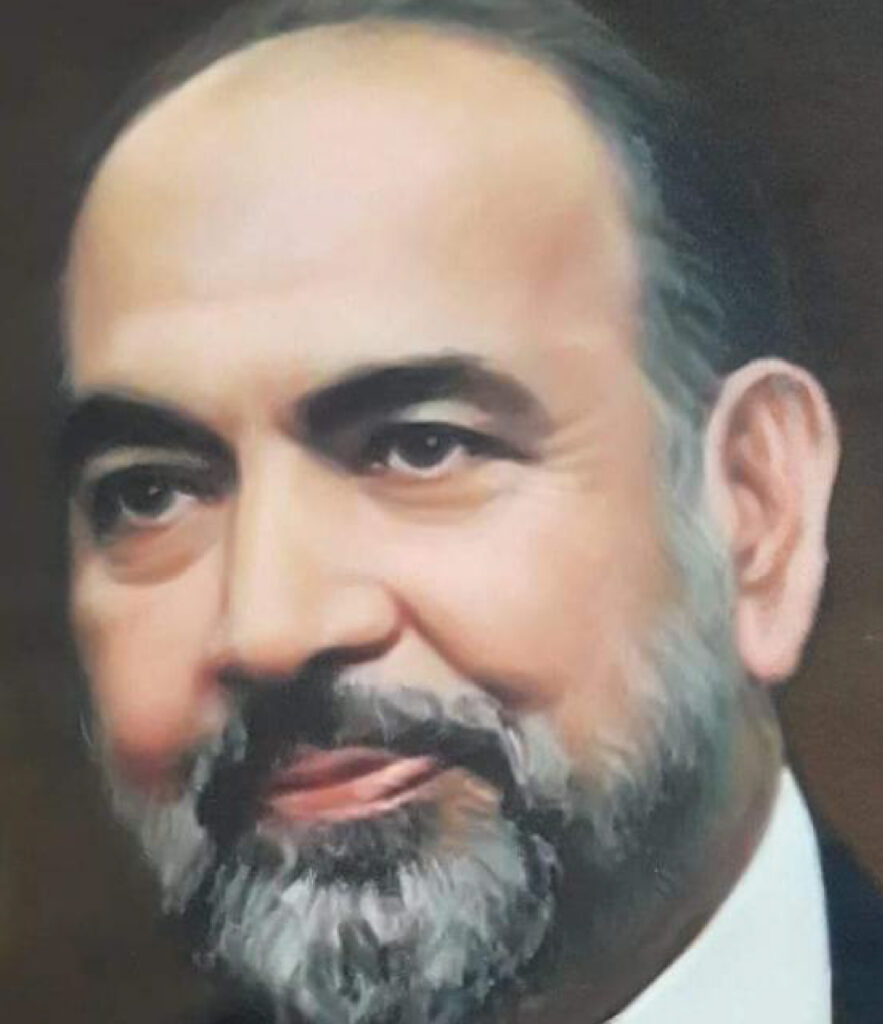
DR. QIBLA AYAZ
Distinguished Islamic scholar and former Chairman of the Council of Islamic Ideology of Pakistan, and recipient of the Tamgha-e-Imtiaz.
Professor Dr. Qibla Ayaz belongs to historical Bannu. He earned Masters in Islamic Studies from the University of Peshawar in 1975 and his Ph.D. from the University of Edinburgh in the field of Islamic and Middle Eastern Studies in 1985.
During his illustrious career, he held important academic and administrative positions in the University of Peshawar including Dean, Faculty of Islamic Studies & Arabic, Director, Institute of Islamic and Arabic Studies, Director, Shaykh Zayed Islamic Centre and Chairman, Department of Seerat Studies. He served as Vice-Chancellor University of Peshawar and Vice-Chancellor Islamia College University.
His major achievements include the establishment of the Department of Seerat Studies at the University of Peshawar, Pakistan Council of World Religions, Al-Farabi Council for Citizen Diplomacy, and Academic for Knowledge and Review (AFKAR). His areas of interest include religious diversity, conflict resolution and religion, peace and dialogue, interfaith dialogue, and citizen diplomacy. He has authored five (5) books and more than twenty (20) research articles.
In his last appointment, he chaired the Council of Islamic Ideology of Pakistan during 2017-2024. The Council is constitutional dispensation and derives its members from amongst persons having knowledge of the principles and philosophy of Islam as enunciated in the Holy Quran and Sunnah, or understanding of the economic, political, legal or administrative problems of Pakistan. The Council is mandated to recommend measures for bringing existing laws into conformity with the injunctions of Islam. It is positioned to make recommendations for enabling and encouraging the Muslims of Pakistan to order their lives- individually and collectively- in accordance with the principles of Islam. The Council is required to compile, in a suitable form, such injunctions of Islam as can be given legislative effect and these compilations guide the legislative process in the Parliament and Provincial Assemblies. As Chairman of the Council, he was entrusted with the sacred and sensitive responsibility of advising the President, Governors, the Parliament and Provincial Assemblies on questions as to whether a proposed law is or is not repugnant to the injunctions of Islam.
His dedicated services and noble contributions have earned him Tamgha-e-Imtiaz.