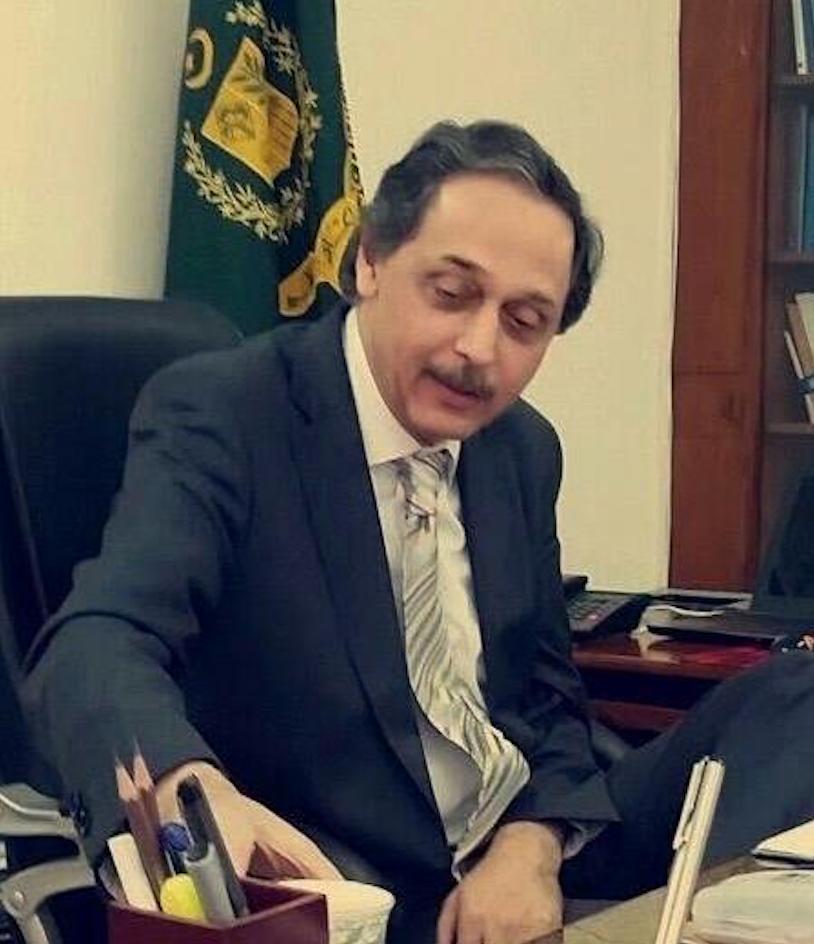
MOHAMMAD SHEHZAD ARBAB
Former Advisor to Prime Minister Pakistan; Chief Executive FATA Development Authority; Author “FATA Reforms CommitteeReport, 2016”
Mohammad Shehzad Arbab joined Pakistan Administrative Service in September, 1981. Starting with his first field posting as Assistant Commissioner, Abbottabad in 1984, he served as Deputy Commissioner in Kohat and Chitral districts and Political Agent, Kurram. His field postings were capped with his assignment as Commissioner Malakand Division in 2000-01. At Secretariat level, he worked as Secretary Irrigation, Education and Establishment Departments. His strategic assignments in relation to the tribal areas included his posting as Chief Executive, Federally Administered Tribal Area Development Authority (FATA-DA) and Additional Chief Secretary FATA. Before heading the Civil Secretariat as Chief Secretary, Khyber Pakhtunkhwa in 2013-14, he served as Chief Secretary to the Government of Azad Jammu and Kashmir for nearly three years.
In the Federal Government, he rendered services as Commercial Counsellor in Federal Republic of Germany. As Secretary to the Government of Pakistan, he headed three Divisions- Commerce, Economic Affairs and States and Frontier Regions (SAFRON). In 2018, he was appointed as Advisor to the Prime Minister of Pakistan on Establishment and worked in this position till April, 2022.
The highlights of his career include the far-reaching Governance Reforms in Khyber Pakhtunkhwa and Azad Jammu and Kashmir and his contribution to the working of the Reforms Committee constituted by the Federal Government in 2015 for integration and mainstreaming of the then Federally Administered Tribal Area. As Secretary, SAFRON, he was Member-cum-Secretary of the Reforms Committee and authored the “Federally Administered Tribal Area Reforms Committee Report, 2016” which recommended merger of the tribal areas with Khyber Pakhtunkhwa. As Advisor to the Prime Minister, he introduced and spearheaded “Performance Agreements” with the Ministries in the Federal Government to set performance targets, get commitment to their achievement, determine timelines and put in place a robust review mechanism for ensuring timely implementation of special initiatives.