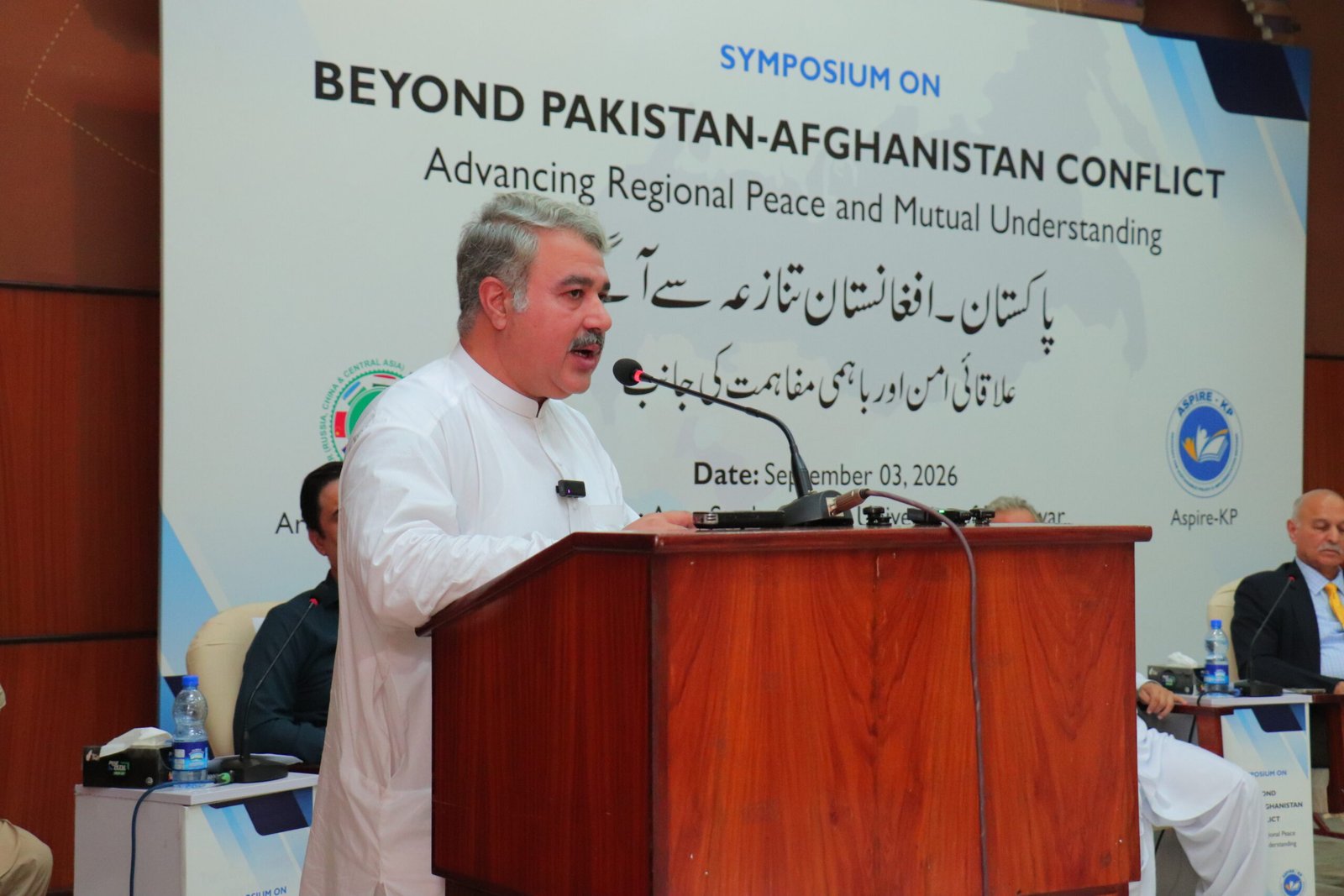
Summary of Collective Impressions, Conclusions and Recommendations of the Symposium on “Beyond Pakistan-Afghanistan Conflict: Advancing Regional Peace and Mutual Understanding.”
Ladies and Gentlemen,
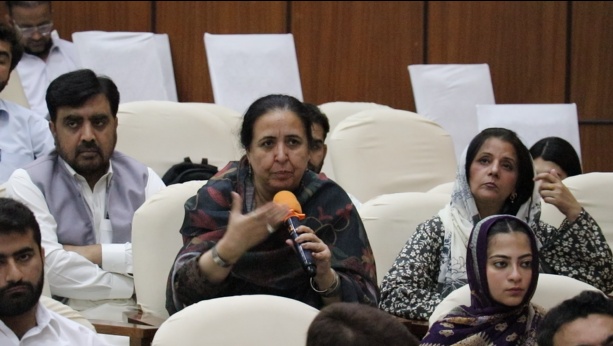
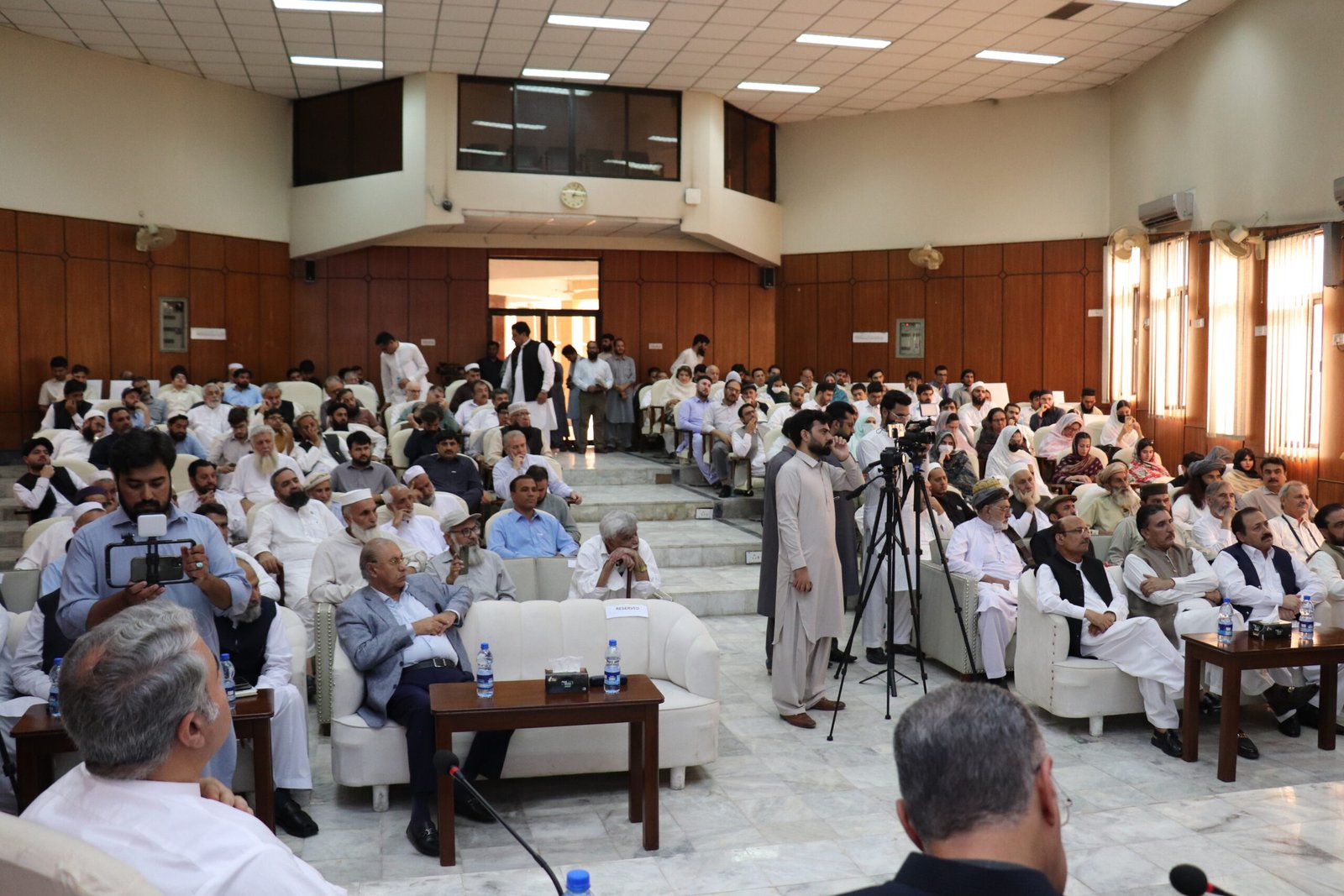
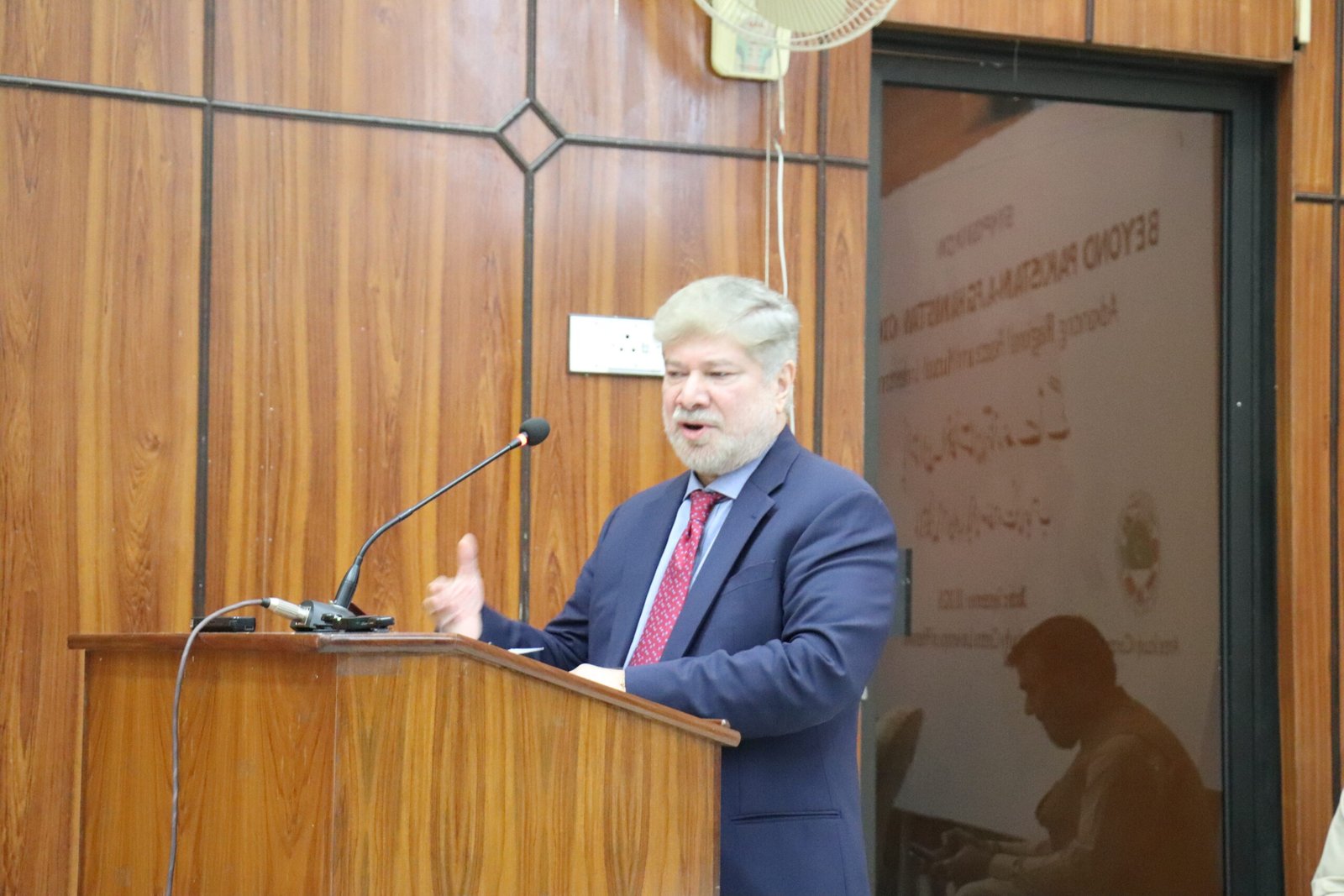
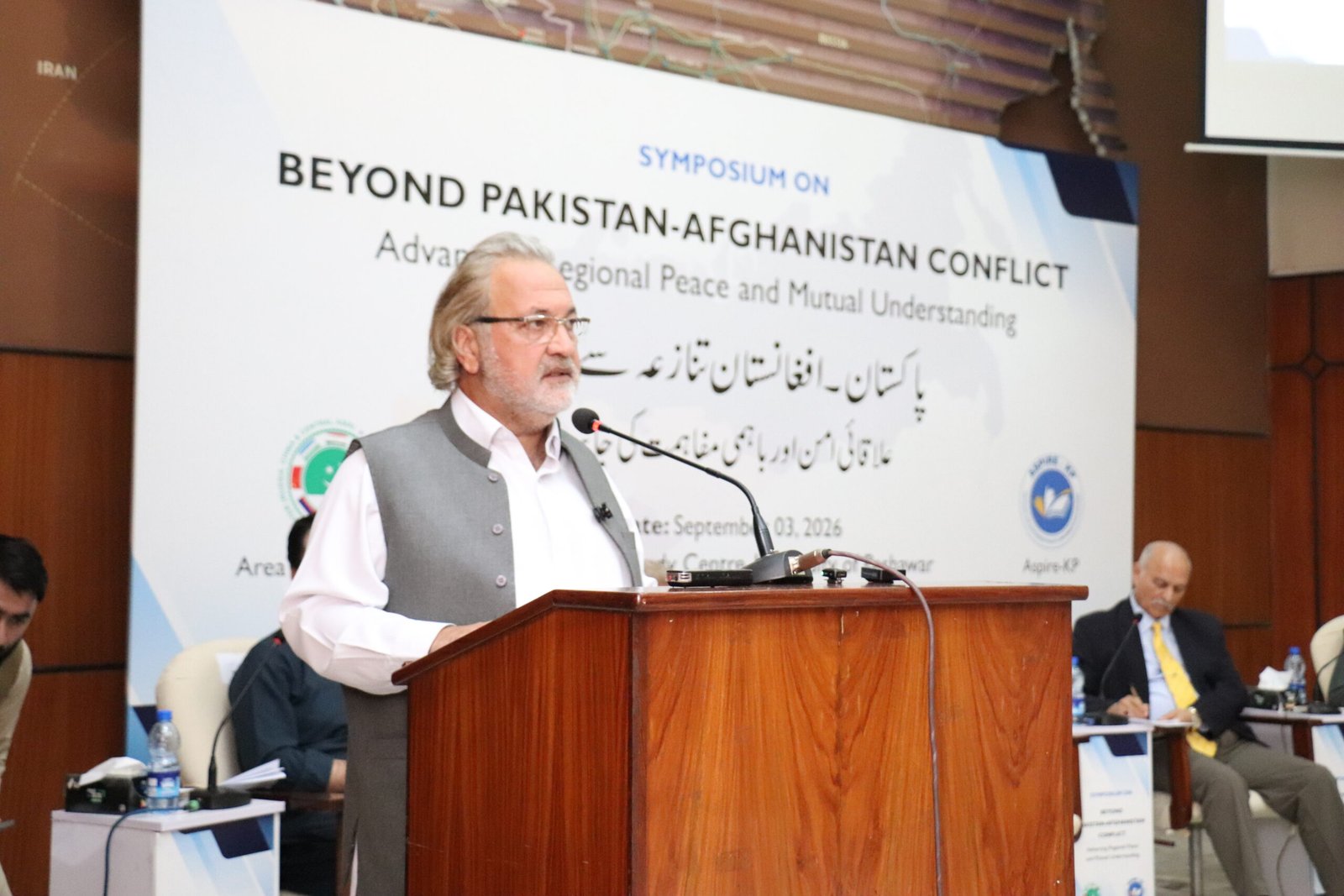
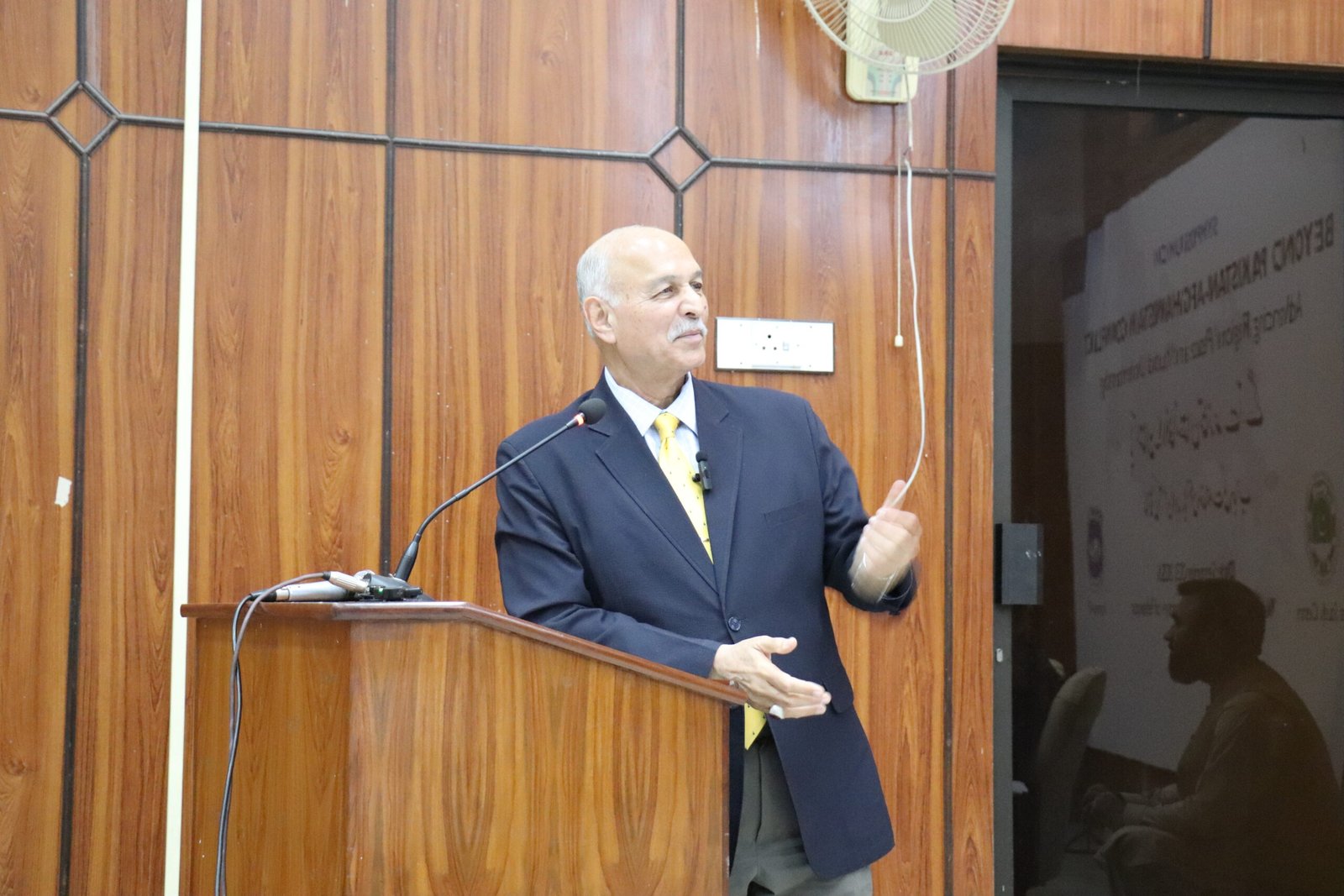
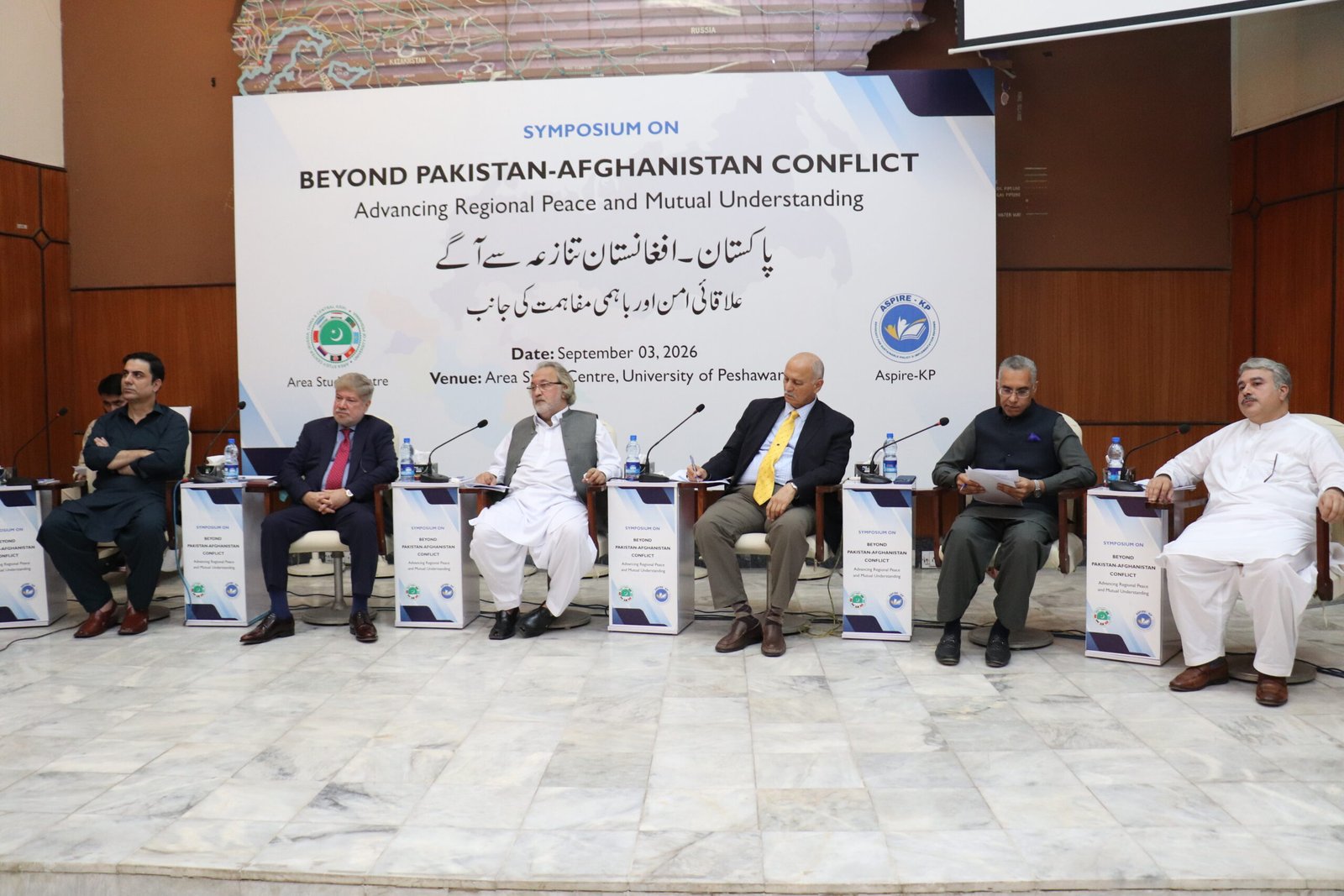
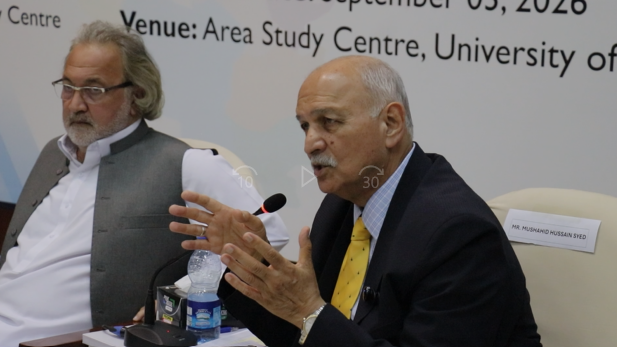
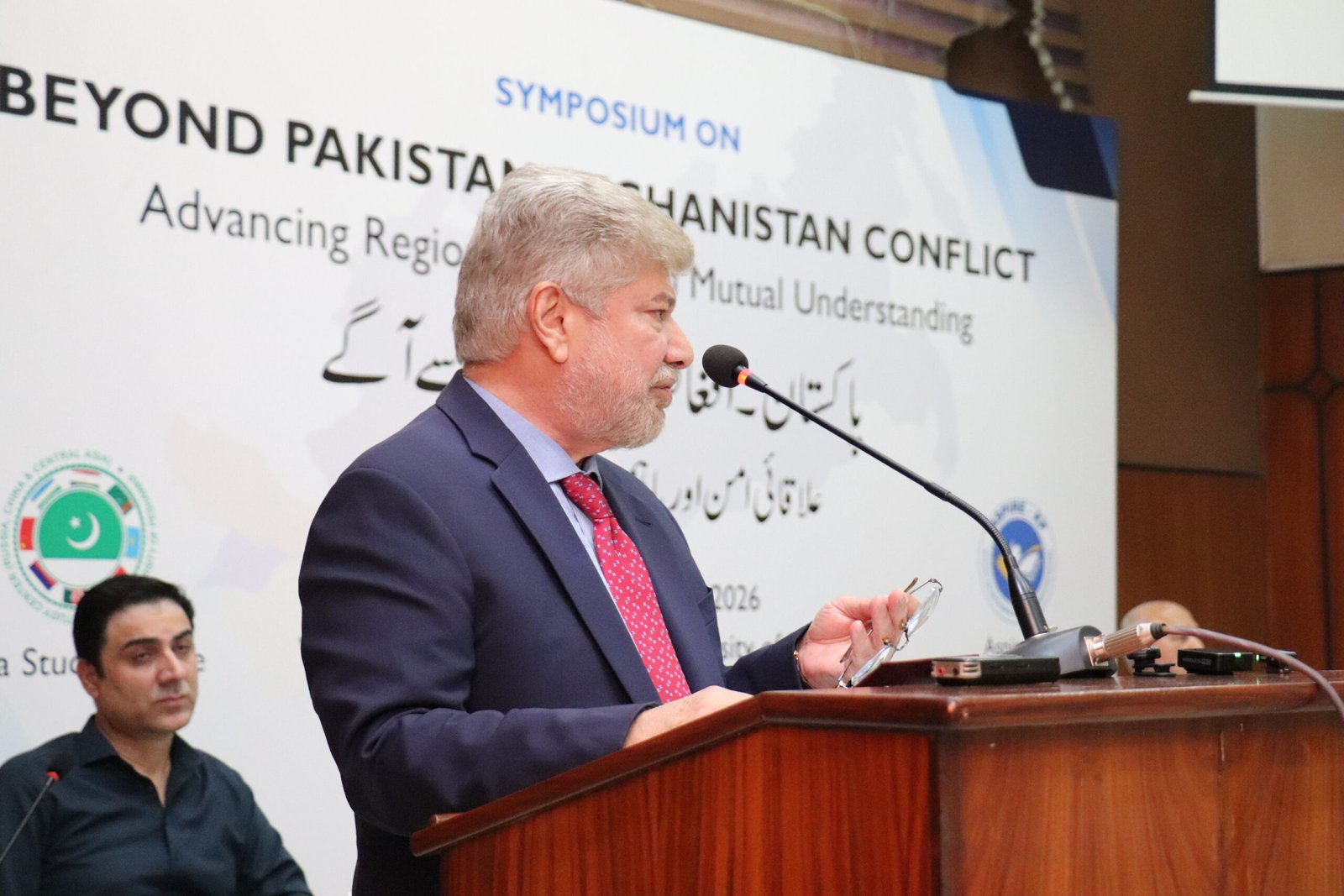
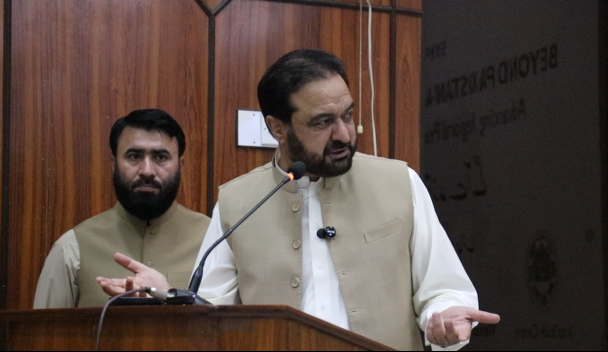
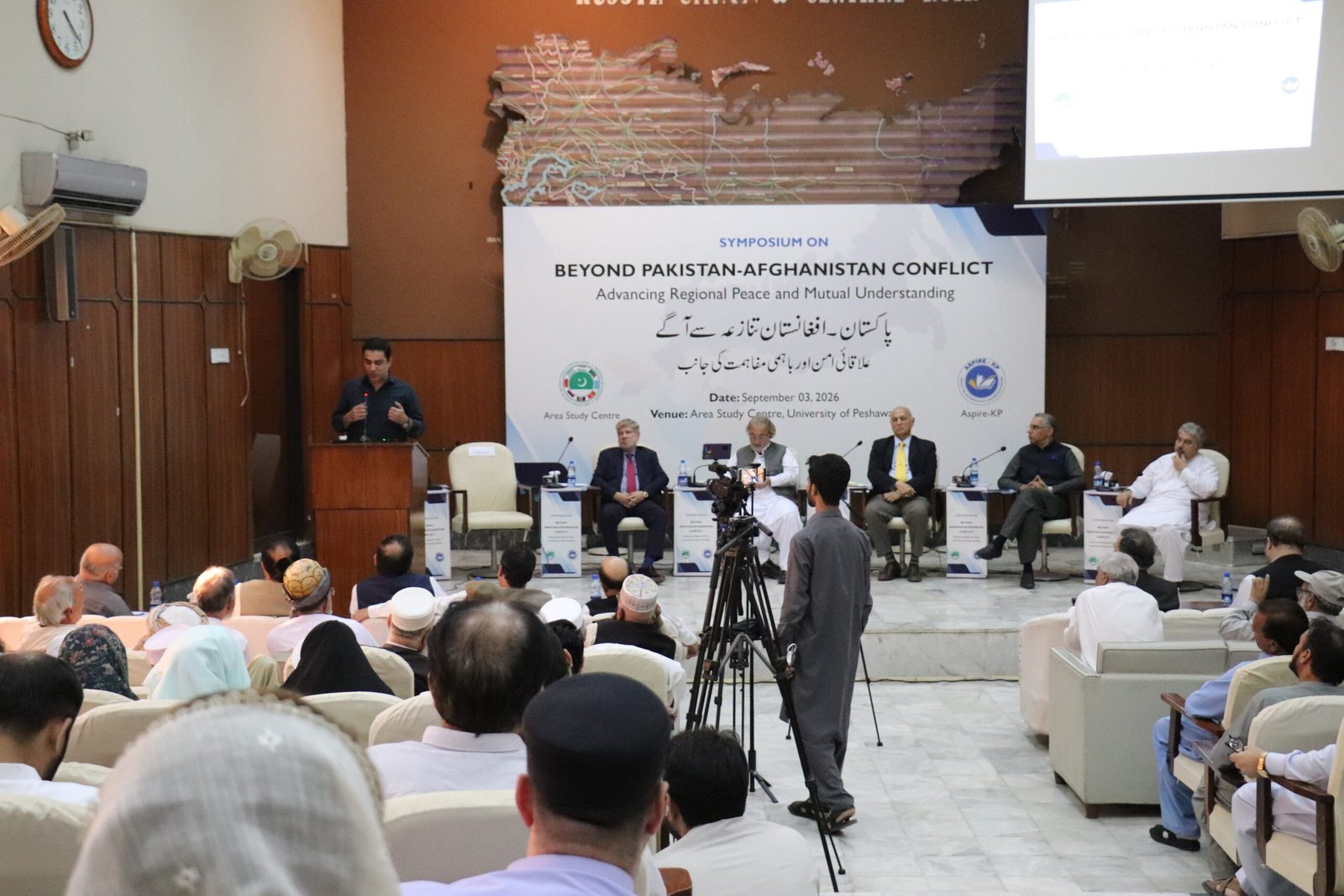
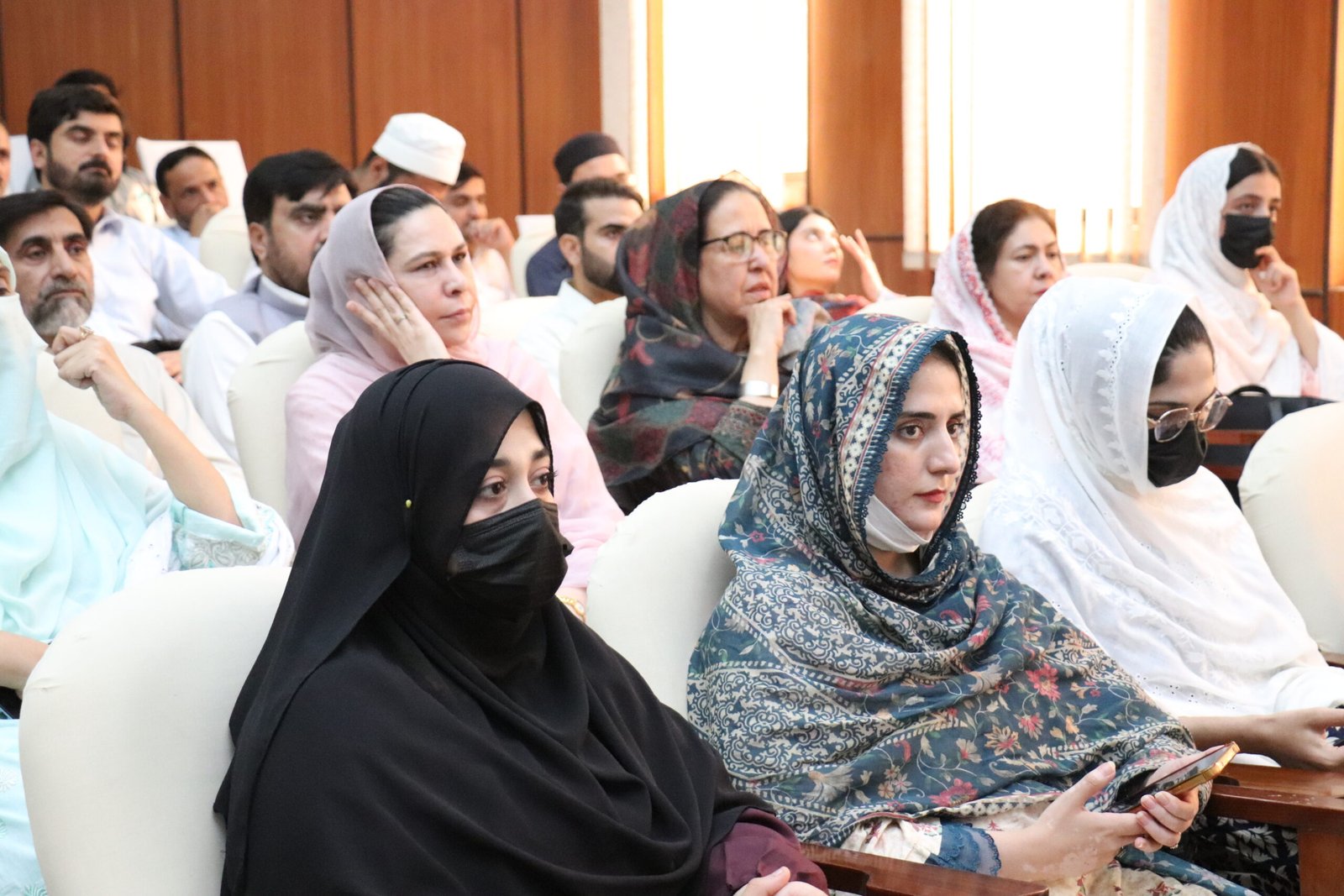
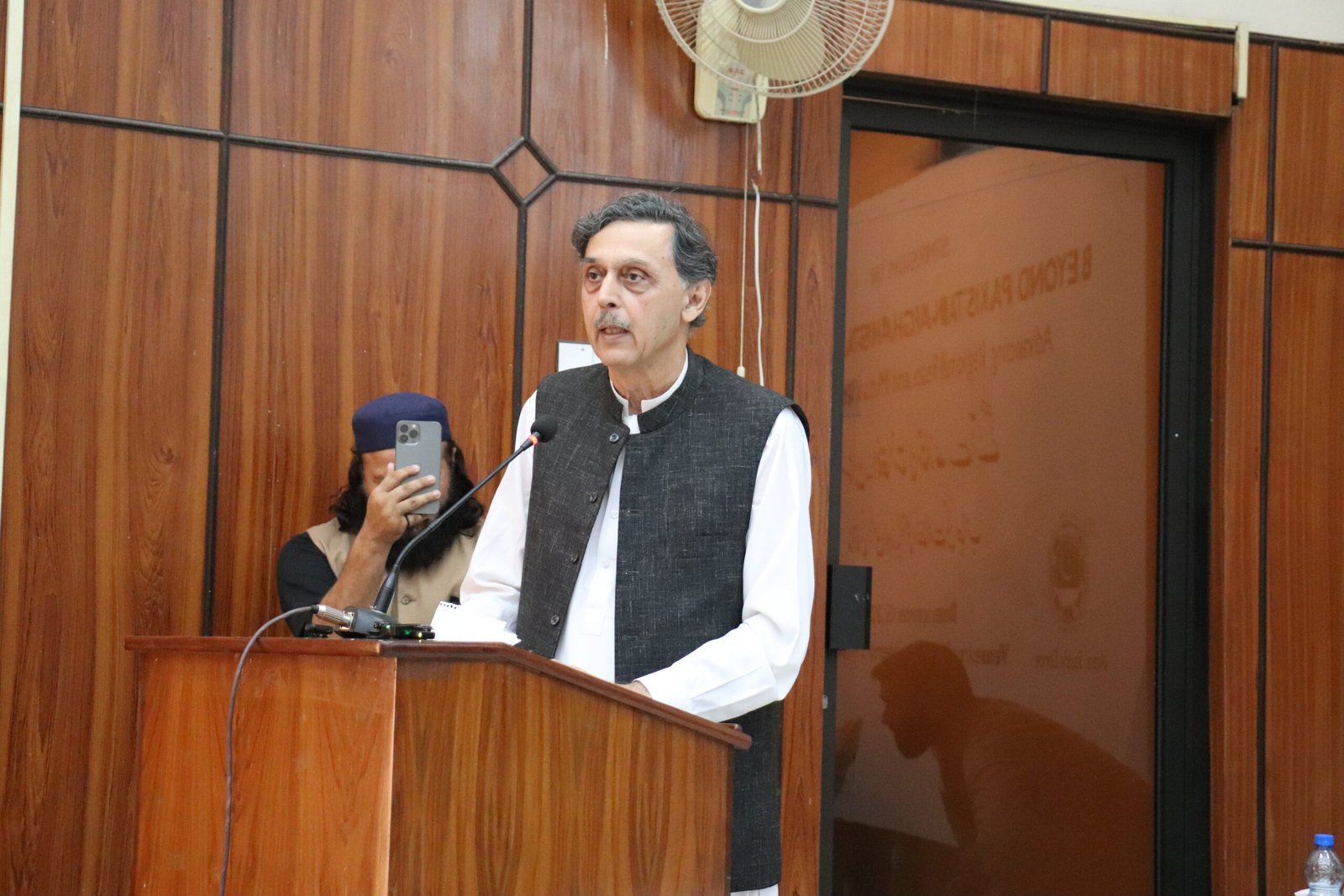
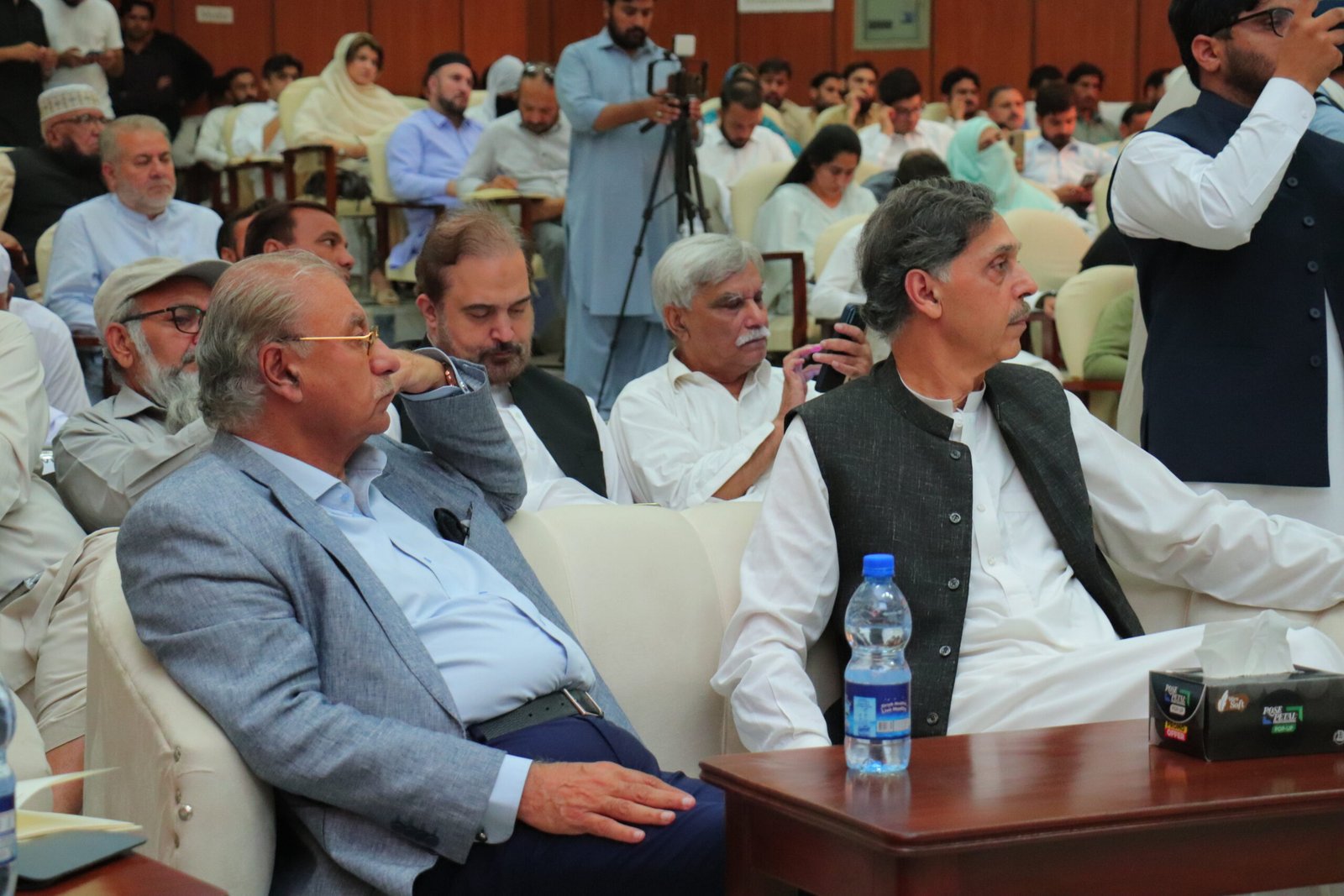
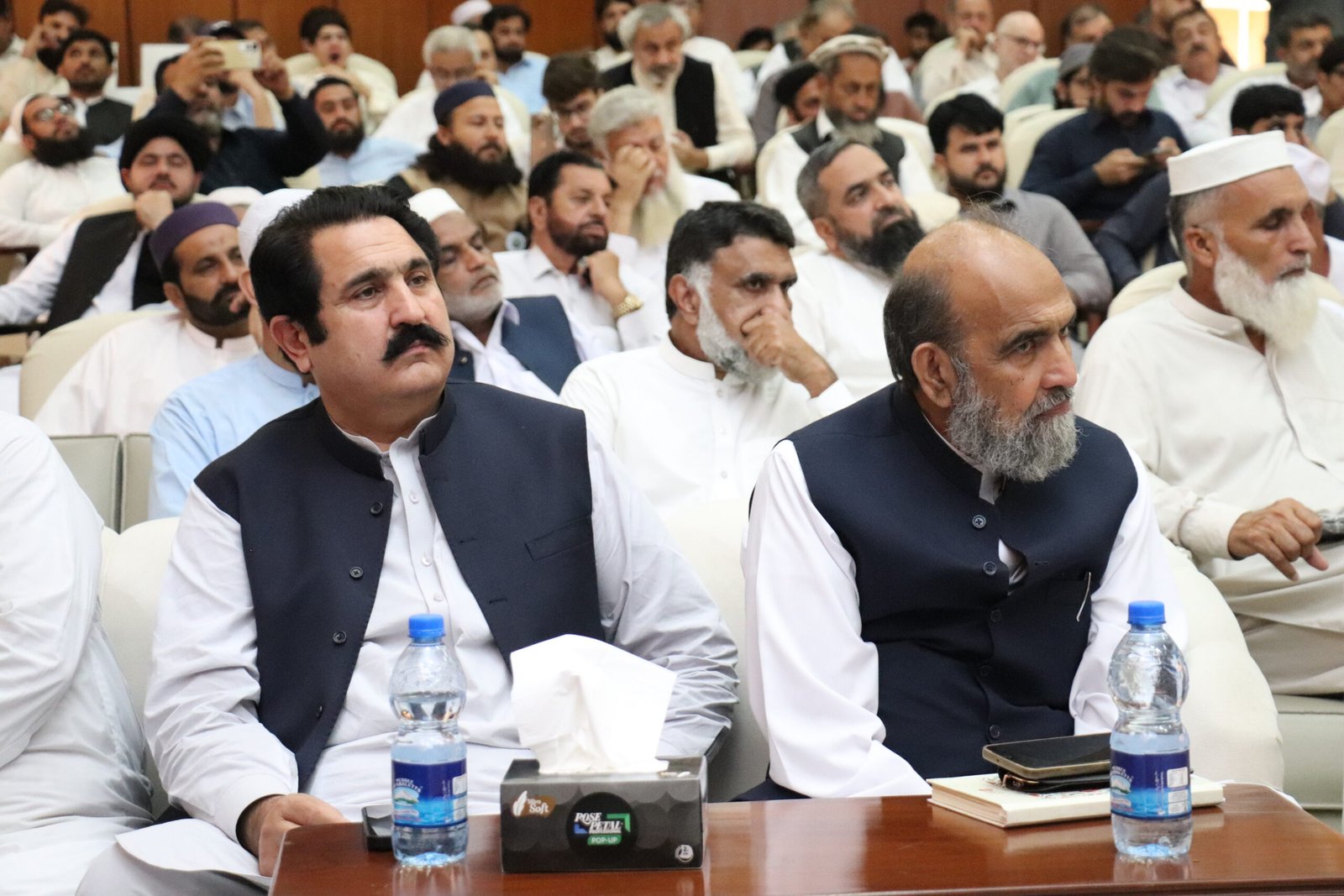
Thank you for your presence in this symposium on the theme- “Beyond Pakistan-Afghanistan Conflict: Advancing Regional Peace and Mutual Understanding.”, organized by Advocacy for Sustainable Policy and Implementation Reforms (Aspire-KP) and the Area Study Centre, University of Peshawar. We invited our distinguished speakers to share their views on some critically important dimensions of these themes. These dignitaries, through their knowledge, experience, observations, and research in their respective fields, have not only guided and enlightened us, but have also provided leads to the policymakers and relevant decision-makers of Pakistan and Afghanistan regarding the path towards peace, security, tranquillity and prosperity. They have correctly diagnosed the problem, envisioned the way forward and have said, with utmost sincerity, what needed to be said. Their message for political and opinion leaders, policymakers and those in decision making positions is simple and plain-it is time to pay heed. The succeeding paragraphs carries the collective understating of the gathering, essence of messages and overview of recommendations of the discourse.
Pakistan has five border crossings with Afghanistan, four of which are located in the tribal areas of Khyber Pakhtunkhwa. Among these, the most important and historic crossing is Torkham in Khyber. Back in 1921, someone wrote about Khyber, “There are two places in the world where if you stay long enough, you can see everybody of any importance-one is Victoria Station and the other is Landi Kotal.” Today, the situation in Landi Kotal, and for that matter throughout the tribal areas as a whole, is volatile. The area is experiencing instability for the past fifty years. Changes in the administrative and management system of these areas have further aggravated this instability, and the recent complete closure of the borders has caused irreparable loss to their economy. This is an open reality, and acknowledging it is not only necessary but essential. The message of this gathering is that both countries- Pakistan and Afghanistan- must attend this issue and find out a solution. Further delay in attending this issue would be criminal negligence.
Traders, manufacturers, producers and industrialists in both countries are in a difficult situation. Ironically, we have closed the important trade route and economic lifeline which we presented and advocated as an alternative to boost regional and global trade. This is not a prudent policy by any standards. At present, both Pakistan and Afghanistan are suffering losses. The collective impression emerging from this gathering is that we can no longer afford any policy that adversely affects-and suffocates- employees and employers, trade and traders, businesses and businessmen, industry and industrialists, investors and investment. With regard to the response of the Federal Government and its relevant institutions to this issue till date, the forum requests the Federal Government to take a moment and reflect on its own frustrating inactivity. An immediate and meaningful review of this policy is the message and appeal from this forum. The policymakers and decision-makers of both countries should step out of their ego, address this difficult situation in the larger interest of their people and work jointly towards a mutually beneficial resolution.
The gravity and sensitivity of the security situation may be assessed from the fact that today we are ranked the most dangerous and terrorism affected zone in the global ranking. There is no denying the fact that it is an organised nexus of evil forces. Terrorists and extremists have ideological platform. They are working on a shrewdly weaved, cunning and sophisticated agenda of turmoil and instability. It is now evident that they are advancing their nefarious agenda with a new approach in selecting their targets. The collaboration between the TTP and BLA is a clear indication of this approach. The collective impression of this gathering is that we- in both countries- have neither understood the actual sensitivity of this issue nor acknowledged its real gravity. For all practical and response purposes, we have not treated it as an important national issue. There is a state of uncertainty and indecision. The message of this gathering is that Pakistan and Afghanistan have no option other than dialogue and mutual understanding. They must understand each other’s concerns, problems and compulsions. The sooner both countries are able to address this situation, the better it will be for both Pakistan and Afghanistan.
As a matter of unfortunate fact, the most important dimension-humanitarian dimension- of repatriation of Afghan refugees has been overlooked by both countries. For Pakistan, one aspect of the issue is that in the past three years, we have lost the remarkable goodwill earned over 46 years of hospitality. For Afghanistan, the cost is phenomenal. Over the past five years, 6 million refugees have returned from different countries. Approximately 80 % of households in Afghanistan are now reeling under debt. The country is facing one of its most serious challenges of malnutrition and food scarcity. Women, in particular, are facing an extremely difficult situation and constitute a major humanitarian tragedy. The collective impression of this gathering is that both countries have mismanaged the issue of repatriation. The return of refugees should not be used as a tool in conflict. It is a humanitarian issue and should be treated accordingly. The message of this gathering is that, in relation to the return of Afghan refugees, Pakistan should keep in view its 46 years of generous hospitality, selfless service, humanitarian values, and religious obligations.
Afghanistan and Pakistan are not ordinary neighbouring countries for each other. According to the President of the Republic of Türkiye, “Pakistan and Afghanistan are an inseparable brotherly entity.” In its relationship with Afghanistan, the most important reference point for Pakistan happens to be the views of Allama Muhammad Iqbal contained in his metaphorical dialogue wherein Ahmad Shah Abdali, in response to some queries tell him, “Asia is like a body. Afghanistan constitutes its heart. Instability in Afghanistan causes turmoil in Asia. Peace and prosperity in Afghanistan lead to calm and tranquillity in Asia.” This forum draws the attention of Afghanistan to this reality with a sincere request to understand its relevance for the whole region. The shell of isolation and the reign of coercion do not conform to the ideals and vision of Ahmad Shah Abdali- the Founding Father of Afghanistan. Likewise, the collective assessment of this gathering leads to a conclusion that the policy adopted towards Afghanistan after 1979 has critical weaknesses. We need a new way of thinking and a new approach to this matter. At this critical juncture, when Pakistan is facing an extremely difficult situation, there is a need for national unity and consensus built with input from all shades of political opinions to confront this challenge.
Today, the world is transiting to a new phase as the era of American Imperialism, its control and hegemony is history now. The steady and constant rise of the Peoples Republic of China is inducing a change and triggering a new balance of power. This is an indication that the 21st century belongs to the East. Three issues- Afghanistan, Middle East, and Ukraine- are the hotspots in this transition and need focused attention for ensuring stability. It is heartening that the Peoples Republic of China has expressed willingness to paly its due role in resolving these issues. For Pakistan and Afghanistan, this is the most important and landmark outcome of the recently concluded meeting of the Shanghai Cooperation Organisation held in Bishkek. The forum concludes with a unanimous appeal for both countries to:
- Avail the most valuable opportunity of mediation by the Peoples Republic of China. It is in the interest of both countries;
- Open borders for trade and connectivity. It will help border communities on both sides;
- Facilitate women, students, and those travelling for medical treatment through expeditious sanction of visas. This will reduce tensions.
- Develop Wakhan Corridor as strategic trade route and “Highway of Peace”;
- Acknowledge and accept that conflict embodies problems, generates bitterness and does not present a solution. It is time to switch over to the path leading to peace. It is in the best interest of the people in both countries and their generations.