Inaugural Speech by Chair
PESHAWAR: In his keynote inaugural address marking the official launch…
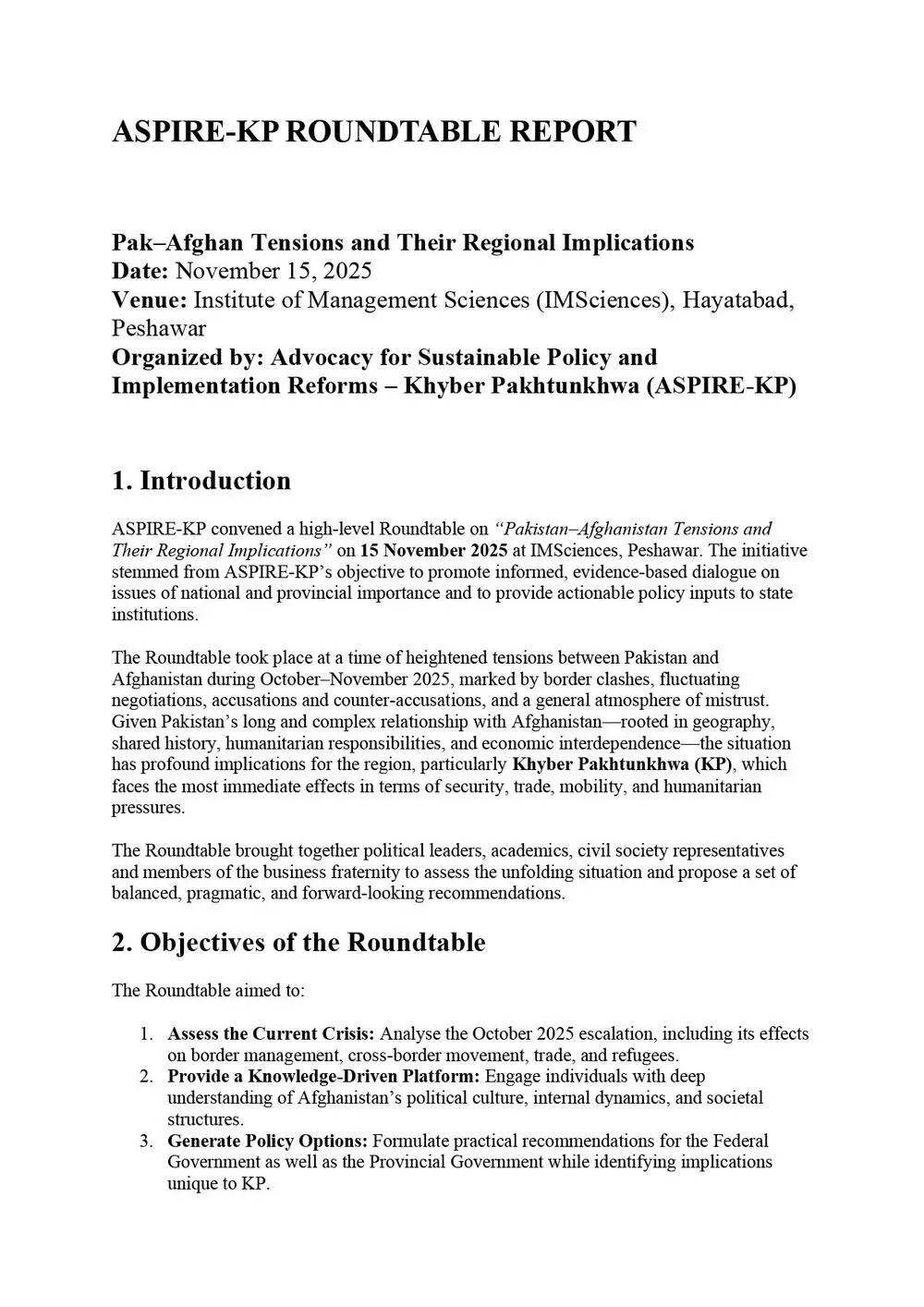
On 15 November 2025, Advocacy for Sustainable Policy and Implementation Reforms (ASPIRE-KP) convened a high-level roundtable at IMSciences, Peshawar, chaired by Chairman Mohammad Shehzad Arbab. The session brought together policymakers, academics, civil society advocates, and business leaders to examine the regional fallout of escalated bilateral friction and trade disruptions.
Frontline Impact on KP: The roundtable highlighted that Khyber Pakhtunkhwa directly absorbs the immediate fallout of bilateral breakdowns—most notably through sudden border closures, economic stagnation in border districts, heightened security risks, and complex refugee movements.
Separating Trade from Politics: Business and chamber representatives emphasized that commercial lifelines—particularly the Torkham corridor—must be insulated from political and military tensions to protect regional livelihoods, transit logistics, and long-term investments.
Dignified Refugee Management: Participants stressed that refugee repatriation must remain strictly humanitarian, guided by transparent procedures and fundamental dignity, rather than being leveraged as a political bargaining chip.
Strategic Understanding: Experts noted that effective diplomatic engagement with Kabul requires understanding Afghanistan’s internal institutional constraints, sovereignty sensitivities, and historical context rather than relying on punitive or pressure-only tactics.
Insulated Trade Policy: Establish mechanisms to keep trade and commercial transport functional despite diplomatic disputes.
Border Efficiency: Modernize and streamline customs and border management procedures to reduce delays at crossing points.
Humanitarian Refugee Approach: Enforce humane, transparent return policies with particular safeguards for vulnerable demographics, including women and children.
Inclusive Diplomacy: Anchor bilateral dialogue in informed, contextual diplomacy involving experts with deep societal and cultural knowledge of Afghanistan.
Provincial Task Force: Form a dedicated Task Force on Pak–Afghan Border Impacts to monitor ground realities, support affected communities, and supply real-time policy advisories.
Support for Border Commerce: Institute rapid-response facilitation desks for traders, transporters, and provincial chambers of commerce during crossing disruptions.
Civic & Academic Engagement: Leverage universities and think tanks to counter polarization, engage youth, and foster evidence-based public discourse on regional ties.
Related Journal Articles
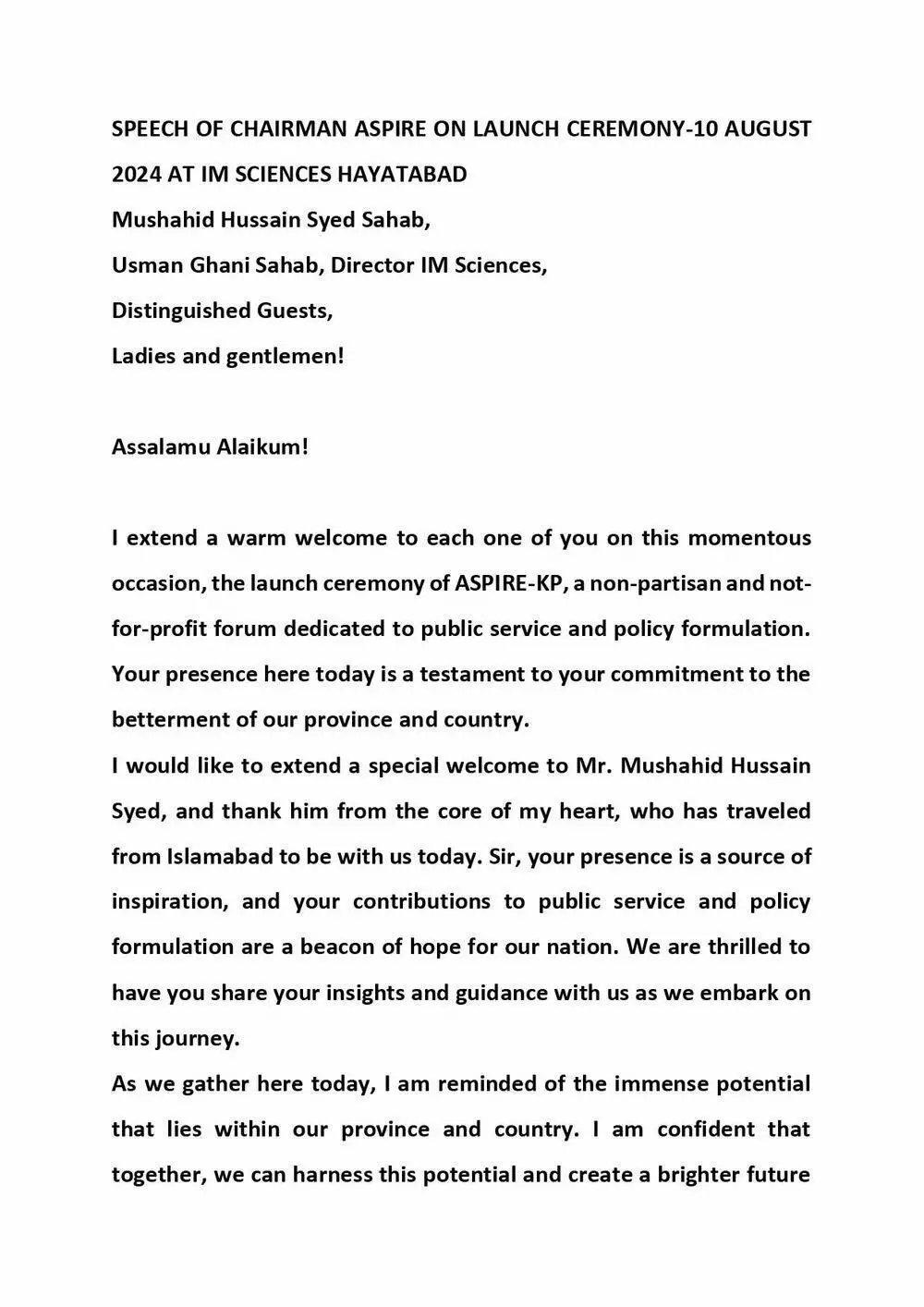
PESHAWAR: In his keynote inaugural address marking the official launch…
PESHAWAR: ASPIRE-KP convened a consultative roundtable on the legal, constitutional,…
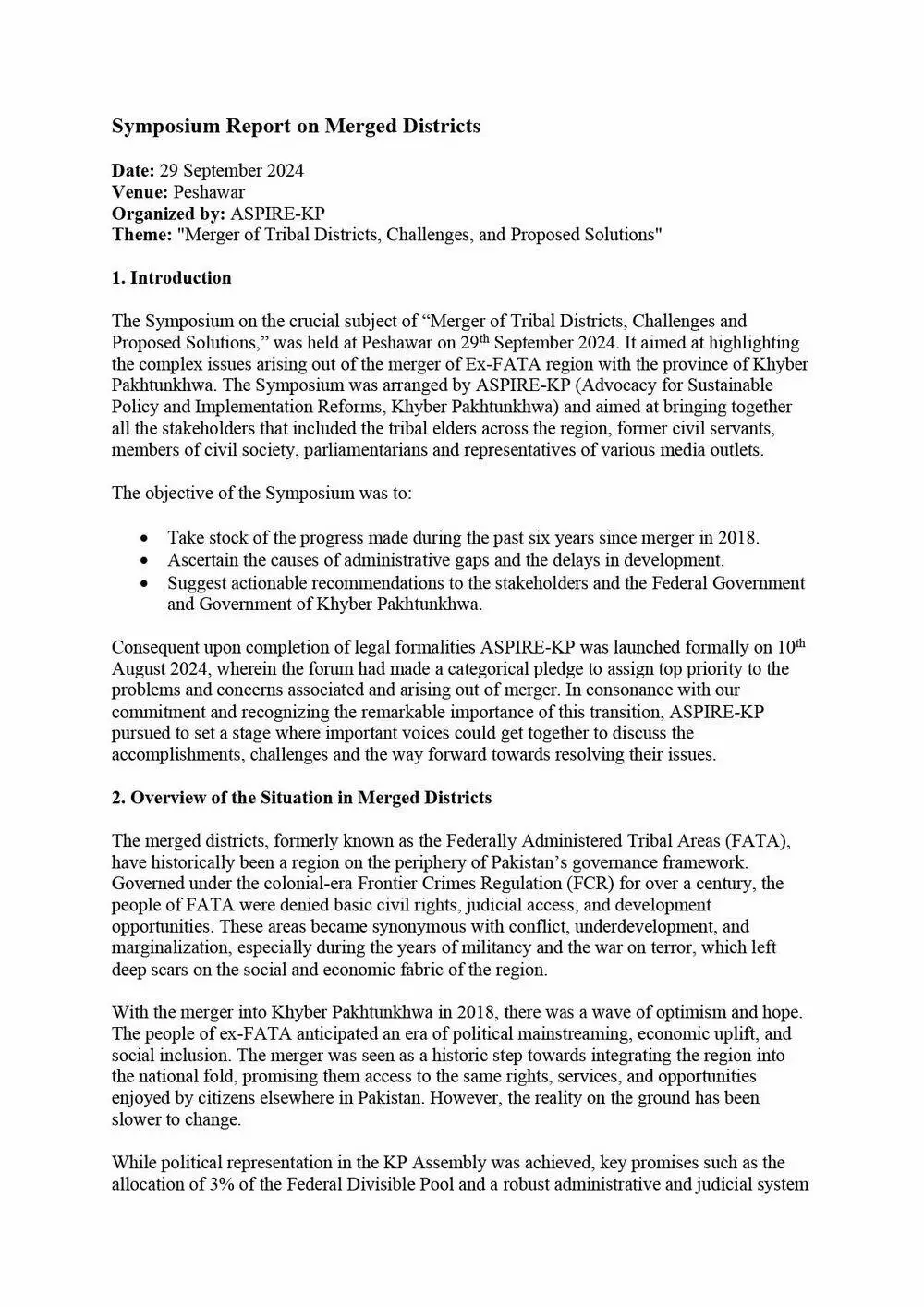
PESHAWAR: ASPIRE-KP convened a landmark policy symposium titled “Merger of…
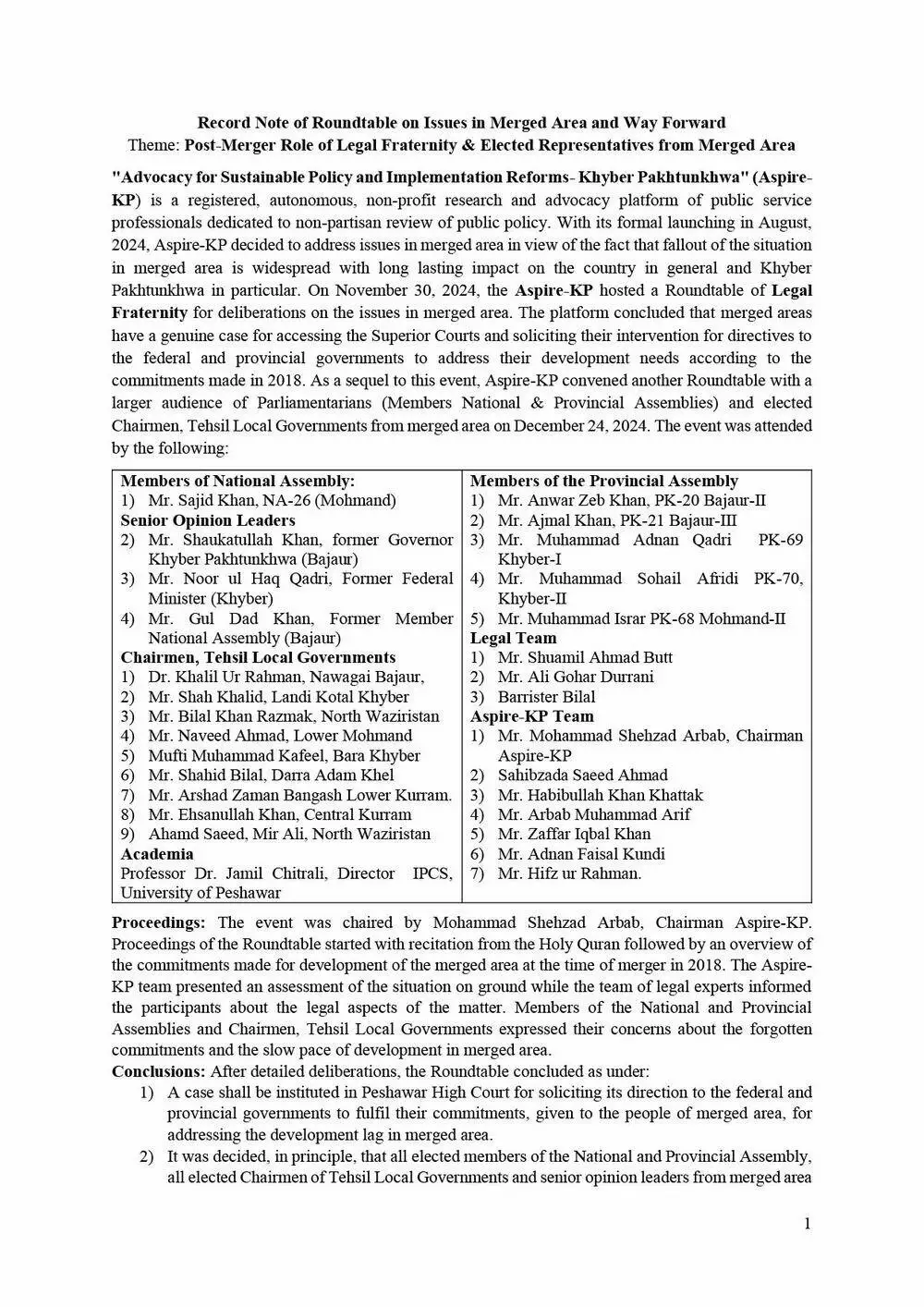
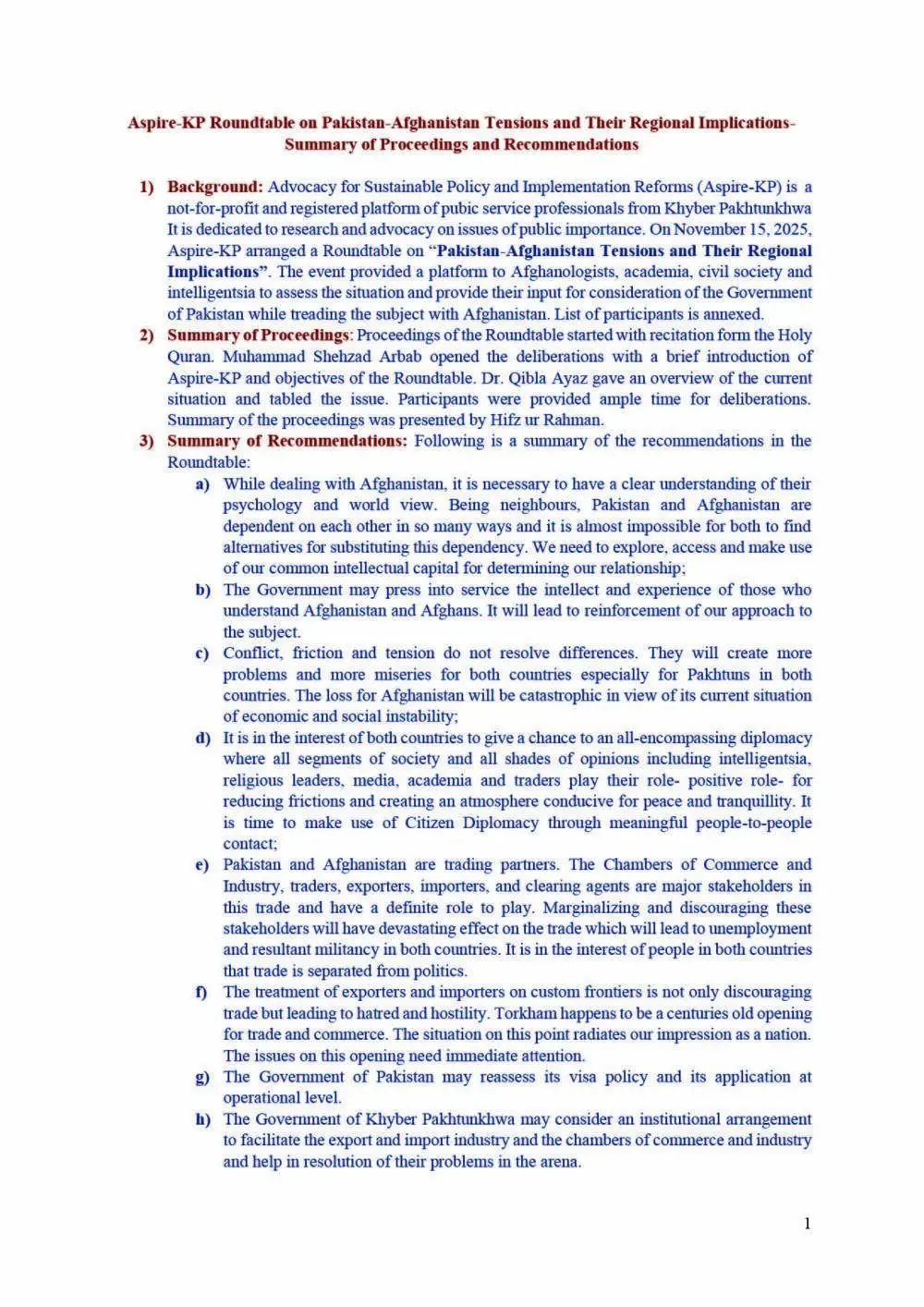
PESHAWAR: Advocacy for Sustainable Policy and Implementation Reforms (Aspire-KP) convened…
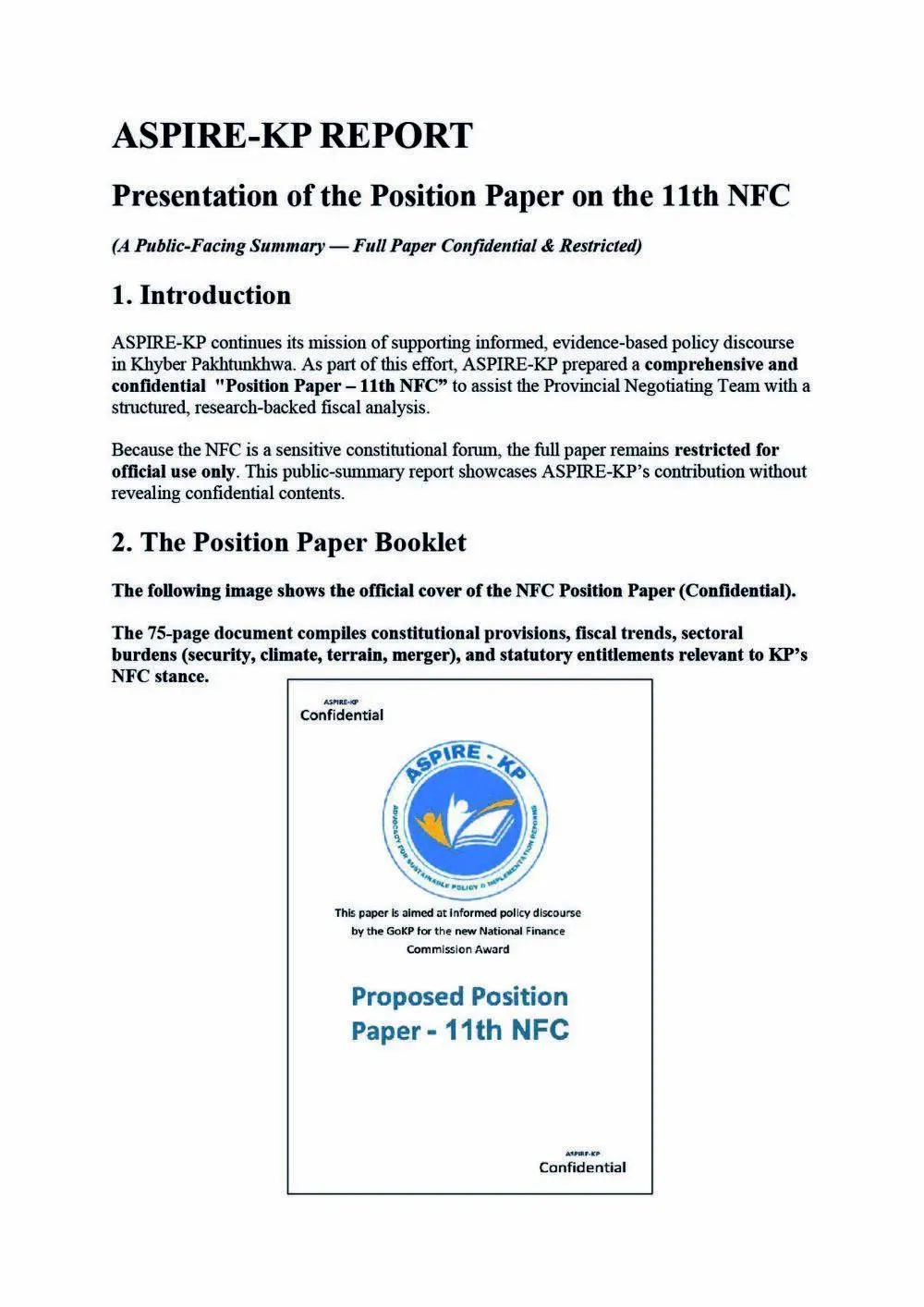
PESHAWAR: Chairman ASPIRE-KP Mohammad Shehzad Arbab has formally presented a…
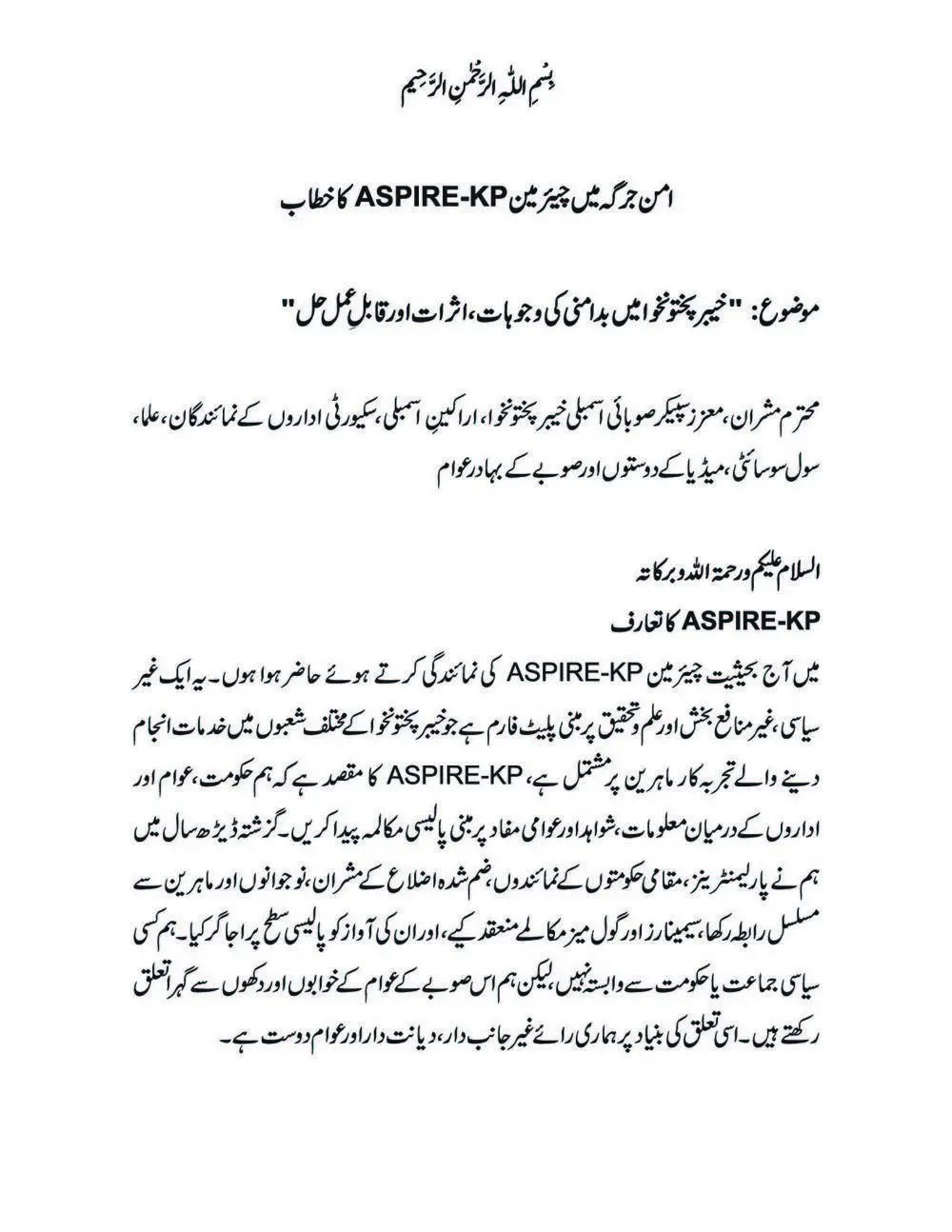
PESHAWAR: ASPIRE-KP has released the keynote address delivered by its…