Inaugural Speech by Chair
PESHAWAR: In his keynote inaugural address marking the official launch…
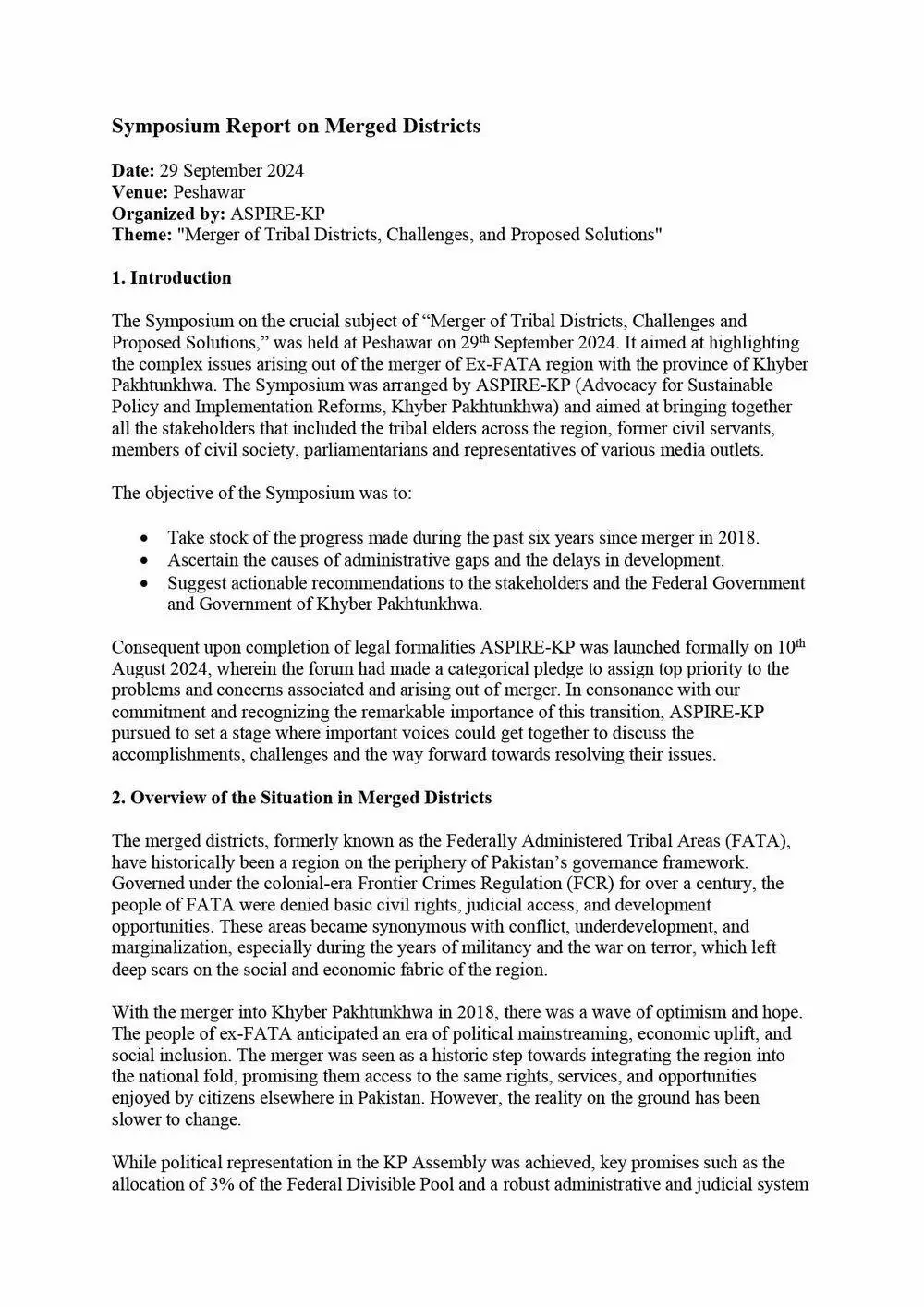
Nature of Publication: Comprehensive Symposium Proceedings, Policy Review, and Actionable Declaration.
Core Subject: Critical review of the six-year implementation record of the 2018 FATA Merger (25th Constitutional Amendment) across Khyber Pakhtunkhwa’s newly merged tribal districts.
Key Findings & Challenges Documented:
Fiscal Defaults: Systematic non-fulfillment of the 3% Federal Divisible Pool (FDP) allocation (pledged at PKR 100 billion annually over 10 years) by the federal government and non-contributing federating units.
Governance & Judicial Voids: Protracted delays in establishing functional local governments, formal district courts, and municipal administrative machinery, leaving colonial-era administrative voids unresolved.
Security Degradation: Resurgence of violent militancy (notably TTP) and inadequate resourcing of regular provincial police wings across the border districts.
Actionable Roadmap (The Declaration):
Establishing dedicated, transparent financial conduits (such as an Escrow Account) for merged district development funds.
Rapid devolution of powers to elected Tehsil Local Governments and accelerated judicial integration.
Unlocking economic drivers: reopening traditional Pak-Afghan cross-border trade corridors, modernizing the mineral extraction regime, addressing land settlement issues, and resolving power/gas shortages.
Concrete post-symposium follow-up campaigns, including engaging the superior judiciary and providing policy/legal backstopping to provincial departments.
Related Journal Articles
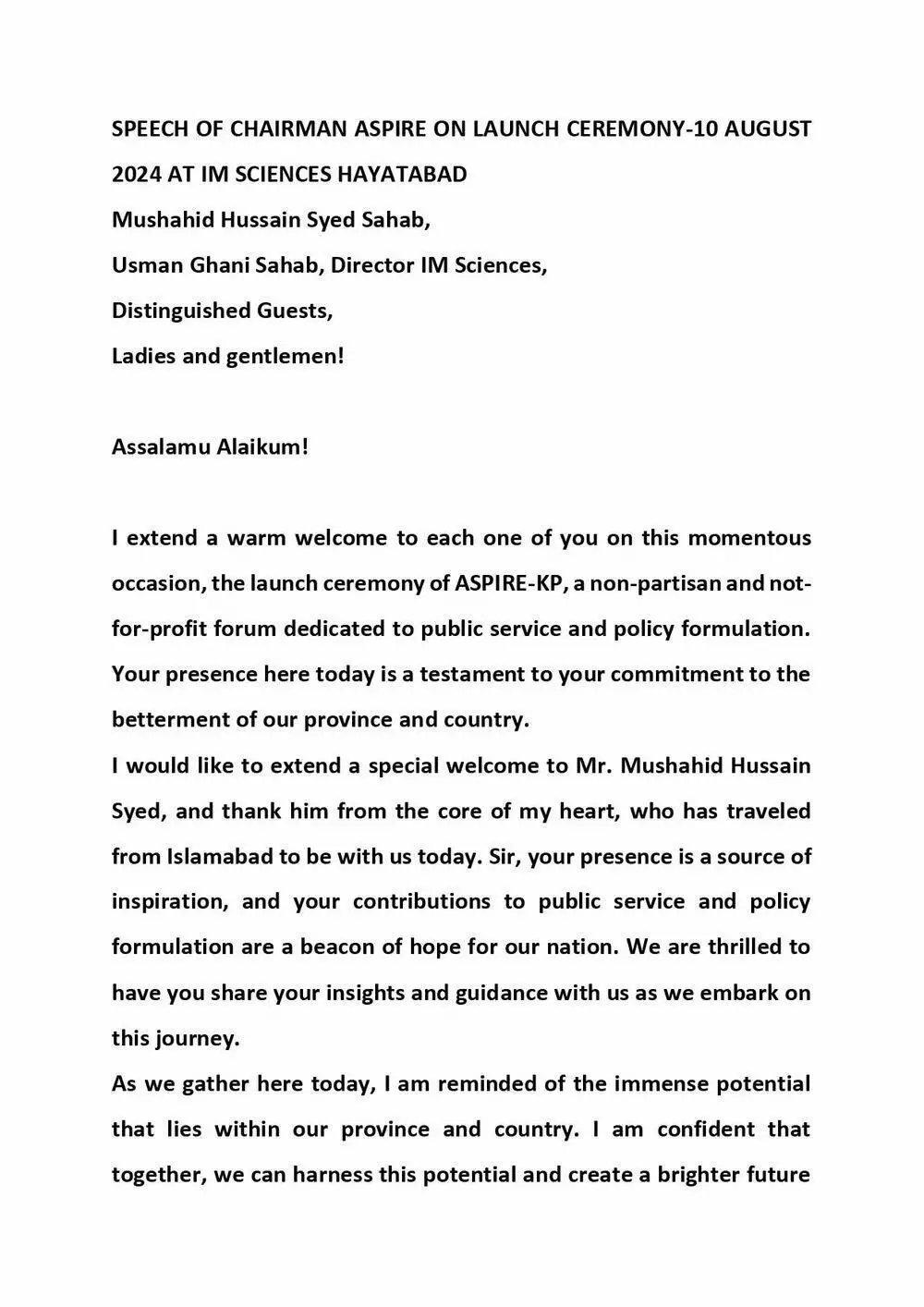
PESHAWAR: In his keynote inaugural address marking the official launch…
PESHAWAR: ASPIRE-KP convened a consultative roundtable on the legal, constitutional,…
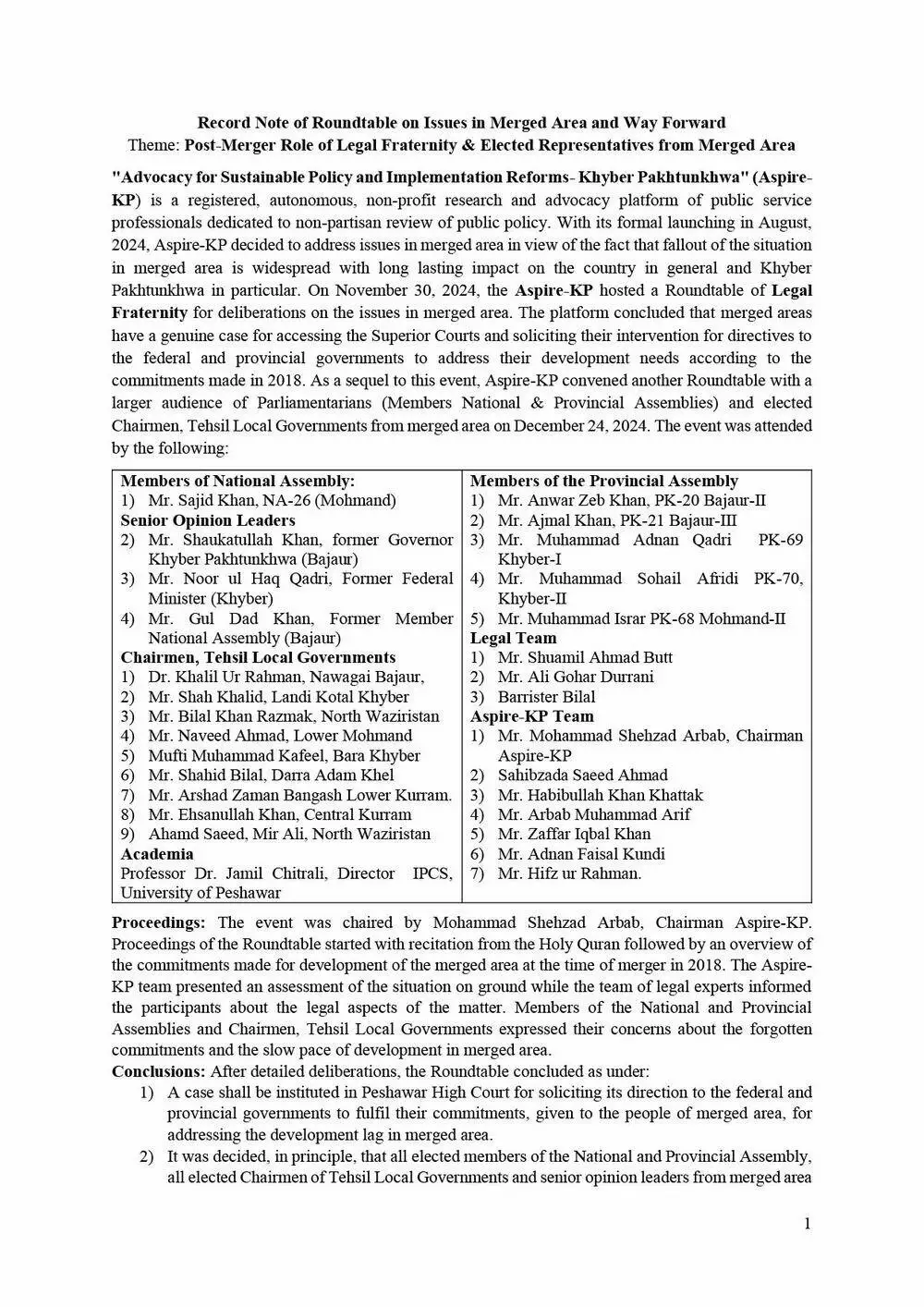
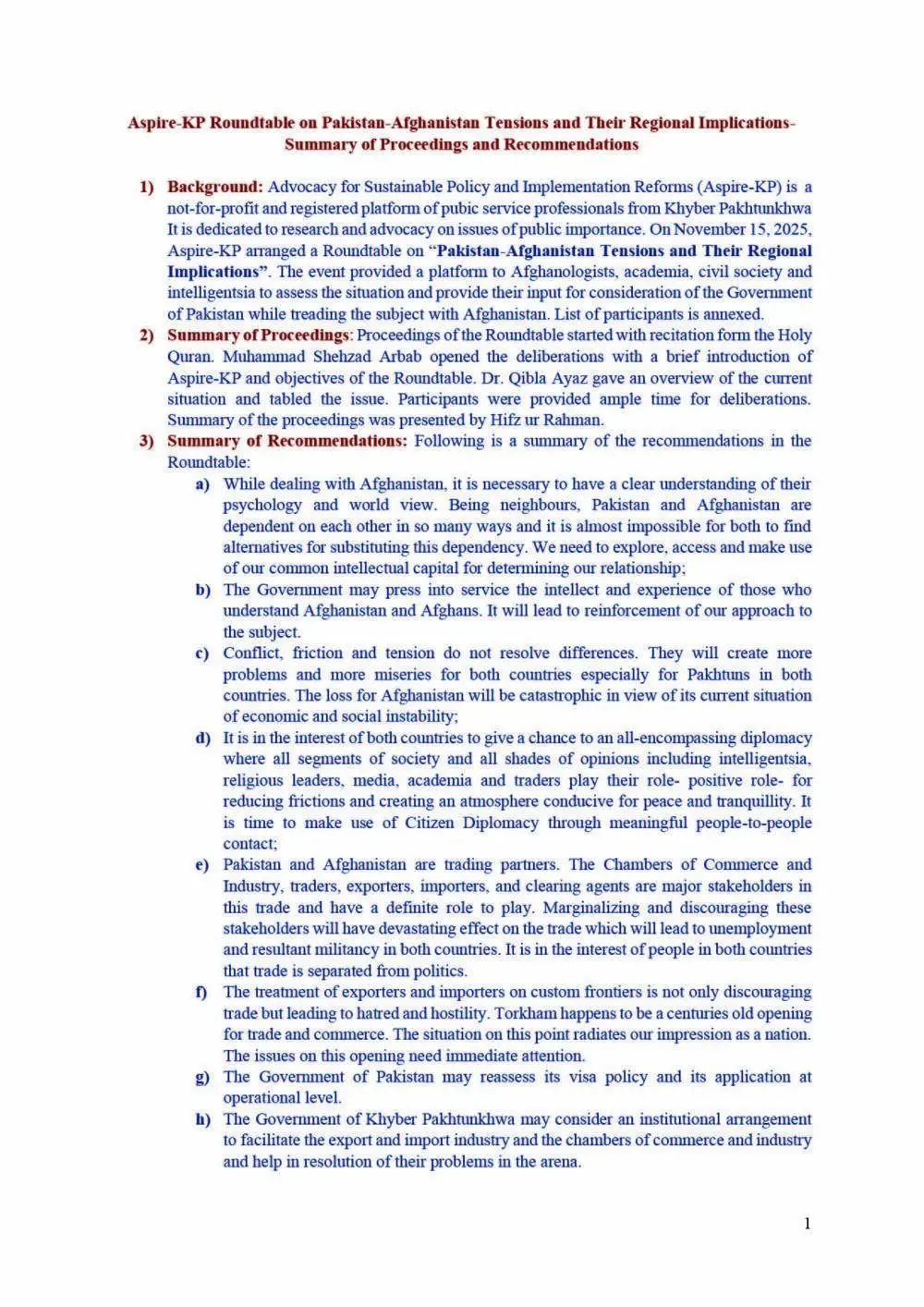
PESHAWAR: Advocacy for Sustainable Policy and Implementation Reforms (Aspire-KP) convened…
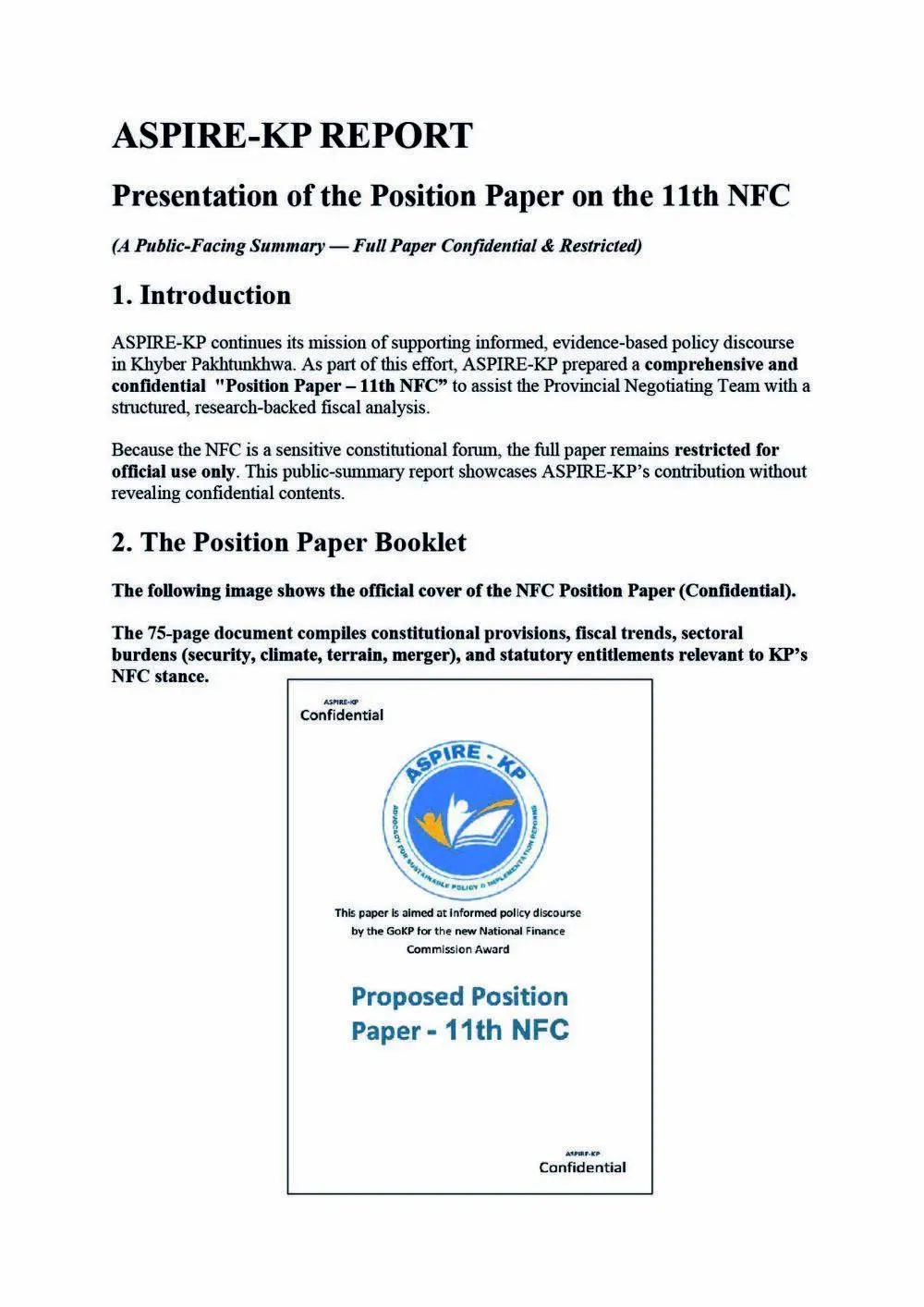
PESHAWAR: Chairman ASPIRE-KP Mohammad Shehzad Arbab has formally presented a…
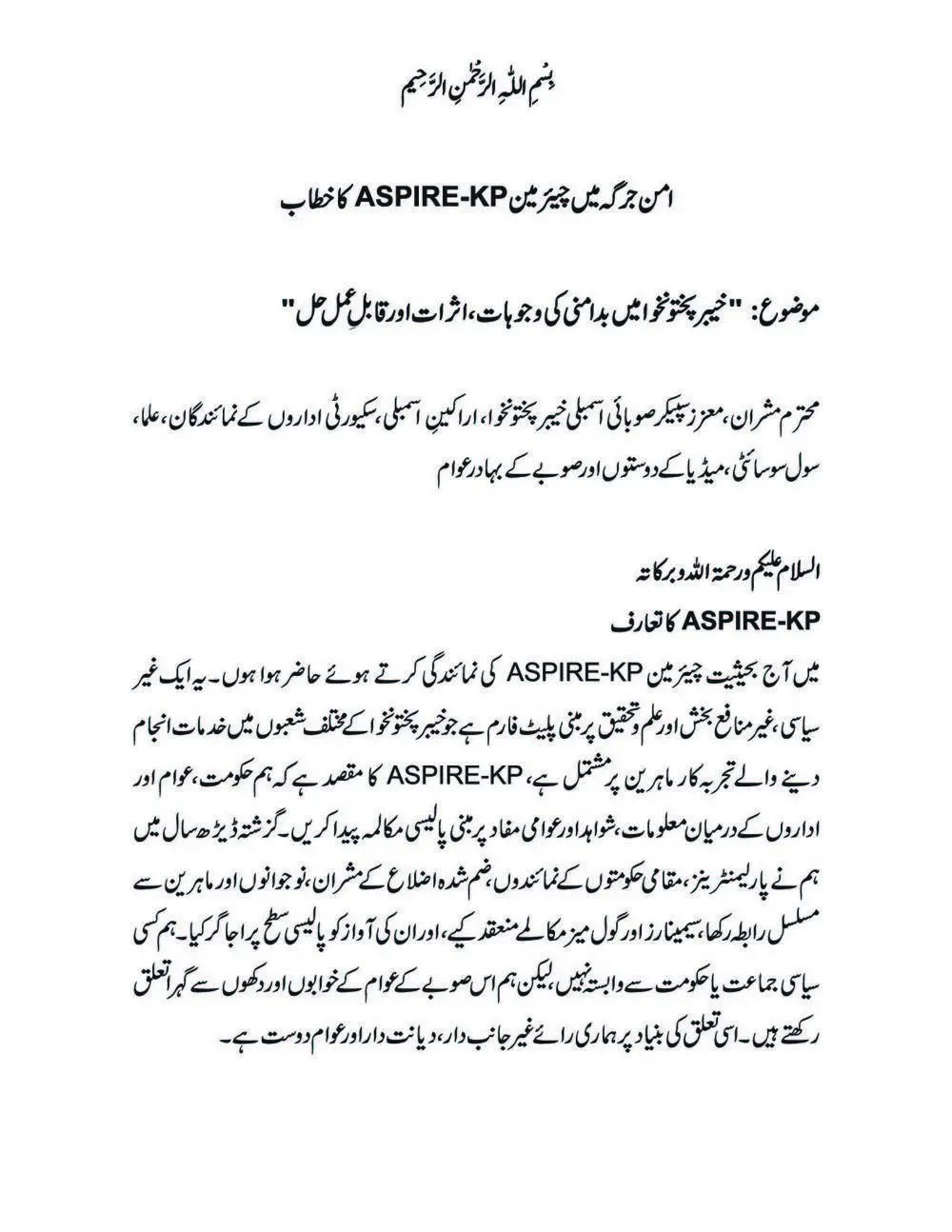
PESHAWAR: ASPIRE-KP has released the keynote address delivered by its…
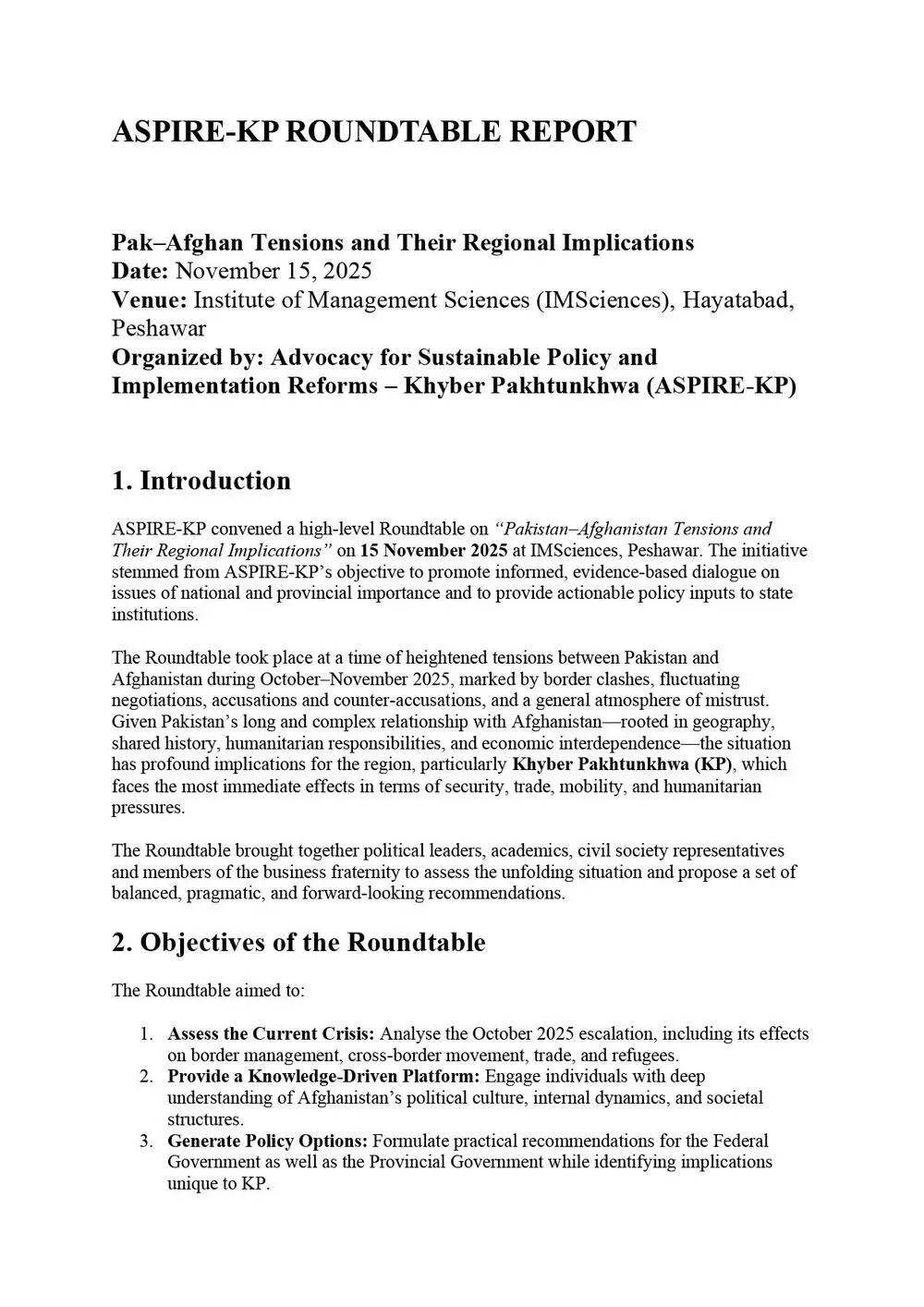
PESHAWAR: In response to escalating cross-border friction, Advocacy for Sustainable…